
Tournament preparation · 2 min read
Plan Food and Hydration for a Long Pool Tournament
A long pool event can turn one expected match into hours of waiting and several short-notice calls. Food planning cannot guarantee performance, but it can prevent the avoidable problem of discovering that the venue is closed, the break is brief or the only available meal is unfamiliar.
Start with the event timeline
Write down check-in, likely match windows, venue food hours and any restrictions on outside food or bottles. Treat the schedule as uncertain and pack for a longer day than the first draw suggests.
Identify refill stations, nearby options and safe food storage. A cooler may be useful only if the venue permits it and food can remain at a safe temperature.
Keep the normal meal pattern
Use familiar meals before and during competition instead of attempting a new diet on event day. Build ordinary balanced choices around foods you already tolerate and can eat within the available break.
Avoid waiting until you feel depleted to find a full meal. A planned meal window is easier to manage than eating hurriedly when a match is called.
Pack portable choices
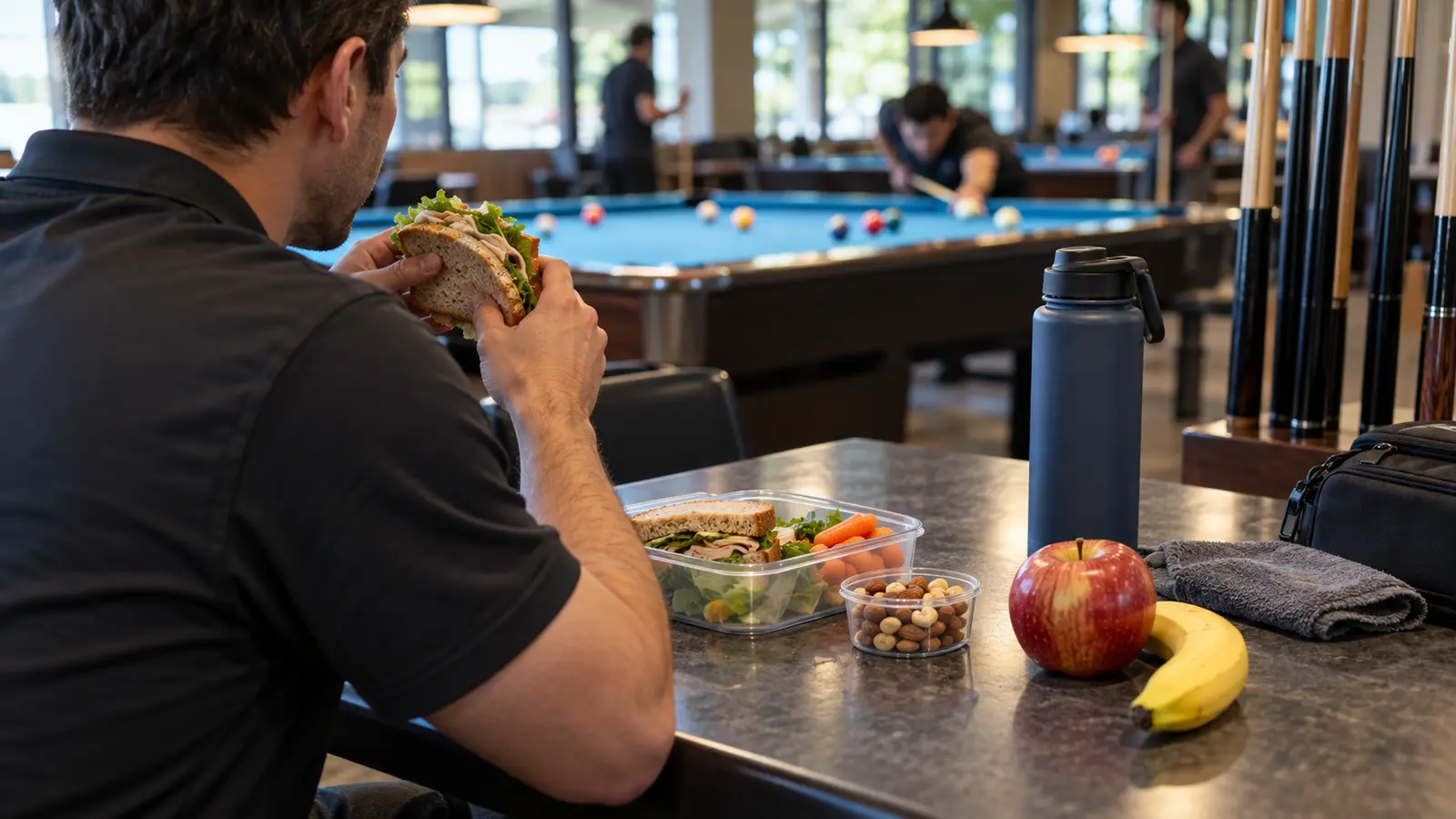
Choose practical items that travel well: fruit, a sandwich or wrap, crackers, a rice bowl if safely stored, or another familiar combination. Pack portions that are easy to finish without leaving a mess near equipment.
Check allergy needs and venue policies. Do not share food across medical or dietary boundaries, and keep hands clean before returning to cues and balls.
Make water easy to reach
Bring a permitted refillable bottle and know where it can sit without threatening the table. Drink at normal breaks and adjust for heat, travel and personal needs rather than following a rigid universal volume.
Very hot conditions, illness and heavy sweating can change requirements. People with medical fluid, kidney, heart or electrolyte restrictions should follow their clinician's advice.
Do not experiment between matches
Competition day is a poor time to test concentrated caffeine, supplements or unfamiliar products. Food and hydration habits should be rehearsed during practice sessions that resemble the event length.
If a product makes a performance or health claim, treat that as a separate evidence question—not a substitute for a meal plan. This guide does not prescribe supplements or a medical diet.
Pack the night before
- Confirm venue food, bottle and cooler rules.
- Prepare familiar meals and two portable snack options.
- Bring a permitted water bottle and locate refills.
- Add napkins, utensils and a sealed waste bag.
- Plan when to eat around likely match calls.
- For clinical dietary needs, use the plan from your clinician or registered dietitian.
Sources and further reading
References support the specific factual information above. The practical checklists are Ariakon editorial guidance.