
Table knowledge · 3 min read
Understand the Working Parts of a Pool Table
A table is four connected systems: PLAYING SURFACE, REBOUND, POCKET and SUPPORT. Naming parts is useful only when it improves diagnosis. This anatomy map links each visible symptom to an observation and safe next action without treating a generic diagram as disassembly or repair instructions.
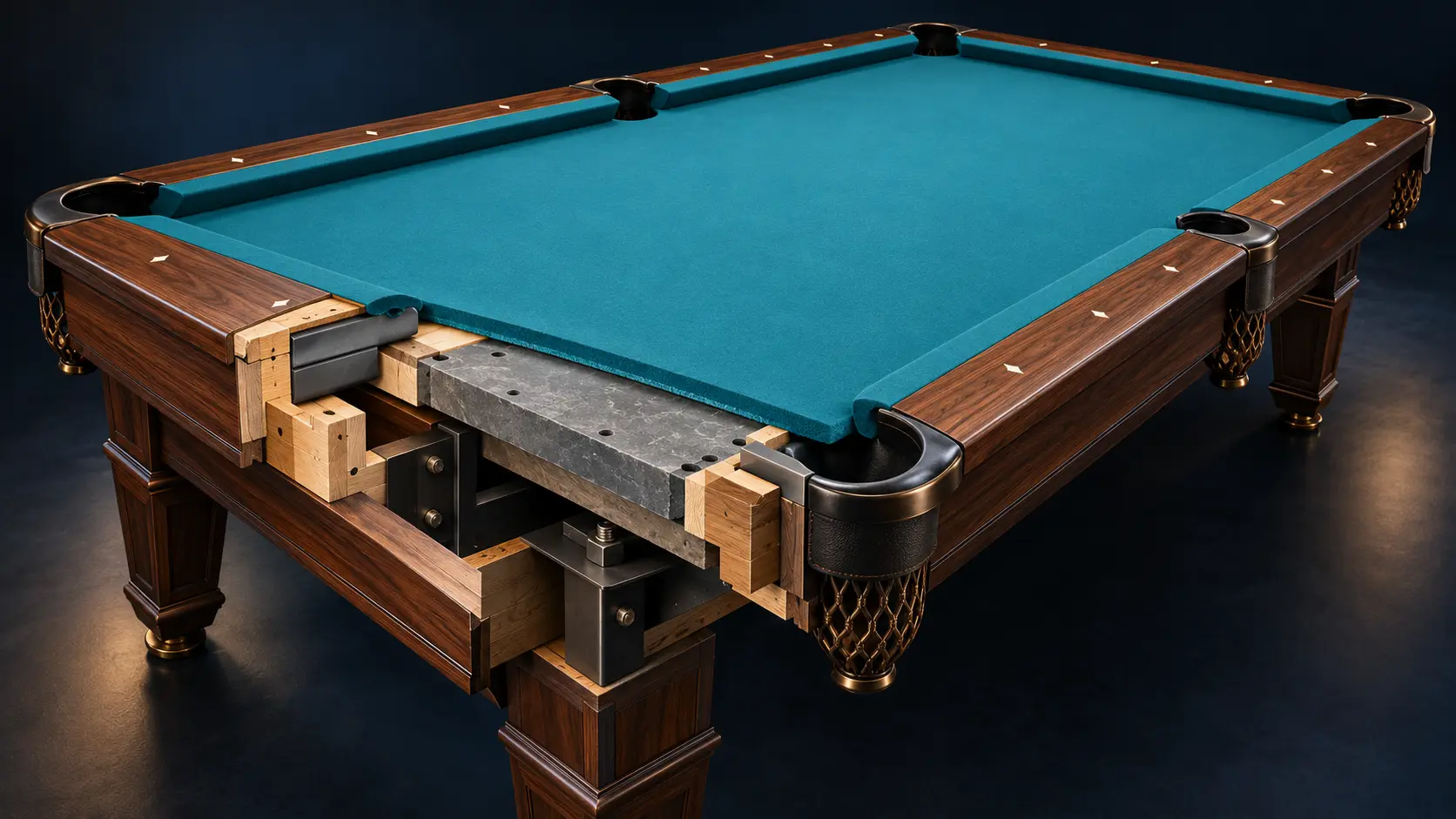
Trace four systems from ball to floor
| System | Common parts | Job | Typical observation |
|---|---|---|---|
| Playing surface | cloth, bed, slate seams where used | flat rolling plane and controlled cloth interaction | roll, wrinkle, seam or wear change |
| Rebound | rail assembly, cushion rubber, nose, facings and cloth | repeatable ball rebound and pocket approach | dead, lively or inconsistent rebound |
| mouth, shelf, facings, liner or return channel | receive and retain legal pocket entries | rattle, reject, sharp edge or trapped debris | |
| Support | frame, cabinet, legs, feet and leveling hardware | carry the bed load into the floor | rock, drift, gap or movement |
Separate names that are often confused
Standard words make service records reproducible. They do not prove material, dimension or construction for an unknown table. Use the exact table documentation for hidden parts and permitted adjustment.
| Term | Meaning | Not the same as |
|---|---|---|
| Rail | structural perimeter assembly | rubber cushion alone |
| Cushion nose | ball-contact point on cushion profile | top rail surface |
| Pocket mouth | opening between cushion noses | pocket liner or bag |
| Bed | supported playing plane beneath cloth | cloth speed |
| Sight | visual marker in the rail cap | a guarantee of identical bank response |
| Foot spot | marked table landmark used by rules and setups | geometric table center |
Map a symptom before naming a cause
| Symptom | First observation | Possible systems | Safe next action |
|---|---|---|---|
| Ball drifts | reverse the same soft route with a clean known ball | playing surface or support | log; qualified level/structure check if repeatable |
| One rail sounds or rebounds differently | same arrival line and speed twice | rebound assembly | log location; mechanic inspection |
| Ball rattles at one pocket | record entry line and speed | facings, mouth, shelf or liner | remove loose debris only; do not reshape |
| Visible cloth change | diffuse-light photo without touching | cloth or bed beneath | use material-specific care or installer |
| Table rocks | note floor and leg movement without lifting | support system | stop play if unstable; qualified service |
Use the preventive care calendar for owner-safe observation and cleaning boundaries.
Troubleshoot by material and system after anatomy identifies the affected area.
Use coordinates to describe locations
For a rectangular pool table, record x=0–8 diamonds from head to foot and y=0–4 from left to right when viewed from the head. A symptom at the long rail near (5,0), for example, is more useful than “the side feels wrong.” Name the nearest pocket and whether the observation is on cloth, cushion nose, rail cap or liner.
| Field | Record |
|---|---|
| Date and conditions | ___ |
| System and part | ___ |
| Coordinate or pocket | ___ |
| Repeat direction | ___ |
| Photo/video ID | ___ |
| Owner-safe step already tried | ___ |
| Next action | observe / clean / qualified service |
Keep structural work outside the anatomy lesson
Slate, frame, cloth installation, cushion replacement, pocket geometry and leveling carry injury and damage risks. Never lift an assembled slate table by its rails, drag legs, file facings or tighten hidden hardware from this page. The equipment reference supplies competition dimensions and terminology; it does not certify a home table or authorize repair.
Sources and further reading
References support the specific factual information above. The practical checklists are Ariakon editorial guidance.