
Practice planning · 3 min read
Take a Planned Break From Pool and Return With a Baseline
A break from pool is not a guaranteed performance tool, and it does not erase technical problems on schedule. It can still be a sensible choice when practice has become careless, life needs the time or enthusiasm has flattened. Define the pause, protect the equipment and record a small baseline so the return is guided by evidence rather than panic.
Choose a reason and a boundary
Decide whether the break is for recovery, scheduling, injury management, travel or a reset from unproductive repetition. If pain or illness is involved, follow qualified medical advice rather than a generic practice plan.
Set a review date instead of promising a dramatic comeback. A planned pause can be extended or shortened when circumstances change.
Record a small pre-break baseline
Before stepping away, save results from three familiar tasks: a straight center-ball shot, a cue-ball speed target and one game-relevant pattern. Record setup, attempts and conditions without adding a personal rating.
The baseline is not a test you must beat immediately. It gives the first return session something more reliable than memory to compare.
Store equipment deliberately
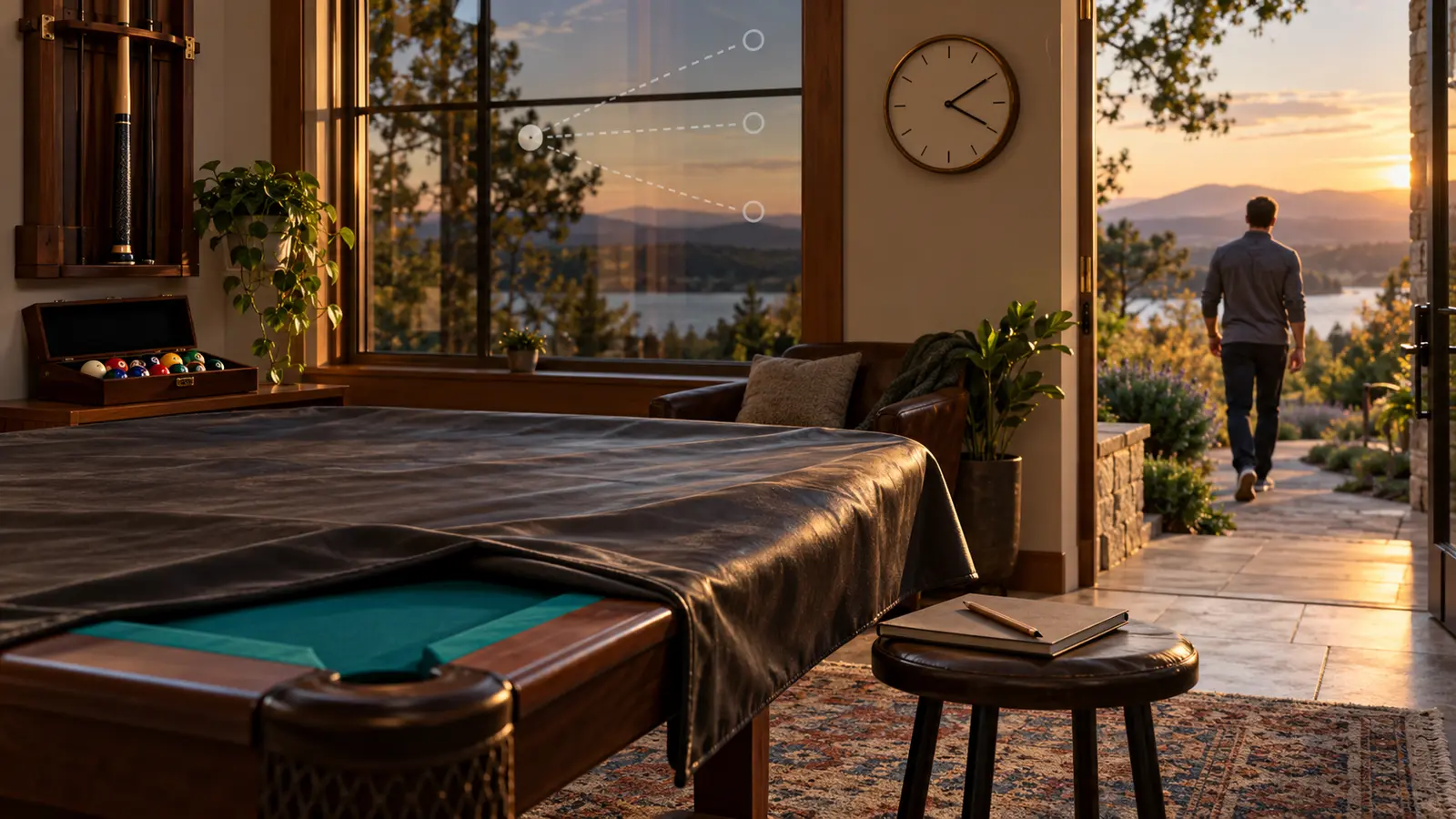
Clean and dry the cue as the manufacturer recommends, separate pieces if appropriate and store them securely away from heat, moisture, impact and unsafe access. Cover the table and keep balls and accessories organized.
Do not attempt unfamiliar repairs just because the equipment will sit unused. Record any service need and use a qualified technician where the work requires one.
Choose distance or light engagement
A complete mental break is a valid option. If the pause still permits study, choose one bounded activity such as reviewing your own patterns or reading the current rules. Record study as study rather than completed physical practice, and leave it out when it conflicts with the purpose of the break.
Research on learning during brief rest intervals and longer training schedules does not justify a universal claim that time off will make every pool player better. Treat rest as context-dependent, not magic consolidation.
Make the first return a calibration
Begin with comfortable center-ball shots, speed control and the pre-shot routine. Expect timing and touch to feel unfamiliar. Do not respond by hitting harder, changing equipment or rebuilding several mechanics at once.
Repeat the saved baseline under similar conditions. Note where the results differ, then choose one priority for the next session.
Ramp through three sessions
- Session one: short fundamentals and the saved baseline.
- Session two: repeatable cue-ball control at moderate difficulty.
- Session three: patterns, safeties and limited competitive pressure.
- Stop before fatigue turns the return into careless volume.
- Compare groups of attempts, not the first miss or first great rack.
- If enthusiasm or physical comfort remains low, reassess the plan without self-judgment.