
Pool room safety · 3 min read
Keep Pets Safe Around a Pool Table
A dog beside a pool table may look charming, but an active practice area contains rolling hard balls, swinging cues, chalk, cleaners, cables and open doors. The safest plan is not to teach a pet to participate. It is to give the animal a comfortable place outside the shot area and remove preventable hazards before anyone breaks a rack.
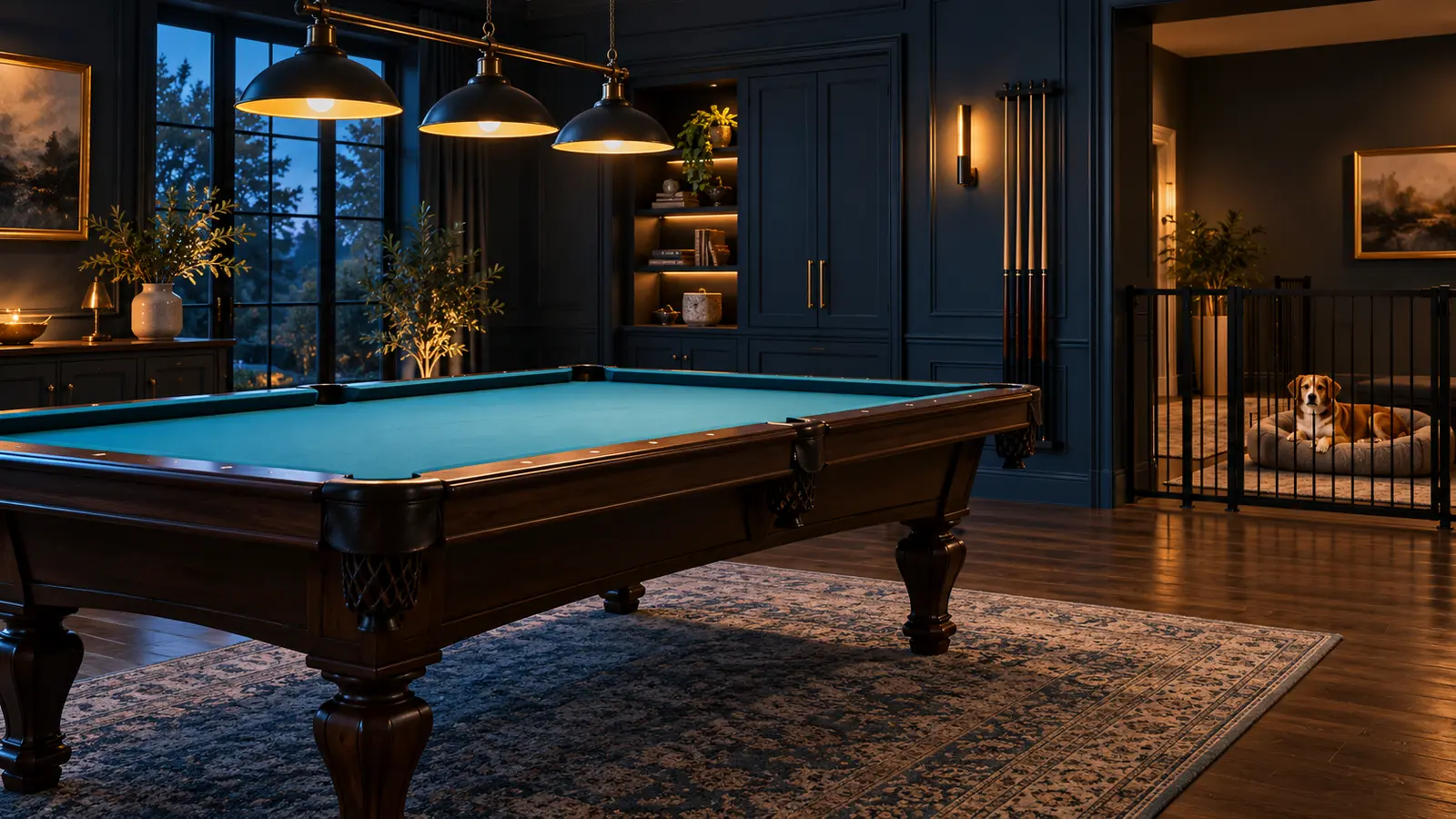
Make active play a pet-free zone
Move pets behind a closed door, secure gate or other familiar boundary before balls are on the table. Include the full cueing area, not just the table footprint: a player stepping backward or finishing a stroke may not see an animal underfoot.
Use the same boundary every session and reward calm settling away from play. Do not depend on a verbal command while several people, loud breaks and moving balls compete for the animal's attention.
Store balls, chalk and tools securely
Regulation pool balls are dense, hard equipment—not pet toys. Return every ball to a closed tray, case or cabinet after play, and keep chalk, tip tools, gloves and small replacement parts out of reach.
Center for Pet Safety warns that unsuitable ball toys can create choking or suffocation hazards. A billiard ball also can damage teeth or become a dangerous object if chased through a crowded room, so never invite a pet to mouth or retrieve one.
Control cleaners and table-care products
Keep cloth treatments, ball cleaners, adhesives and household cleaning products in their labeled containers and in a closed storage area. Follow each product label and keep animals away until the surface is ready for normal use.
If a pet may have swallowed or contacted a maintenance product, preserve its container and label and contact a veterinarian or animal poison resource promptly. Do not guess at treatment or induce vomiting without professional direction.
Secure cables, lights and movable gear
Route camera, light and charging cables away from paws and chewing. Weight or lock stands, keep cases closed and do not leave a mechanical bridge, rack or cue leaning where it can fall.
A fitted table cover protects cloth from hair and claws when the room is idle, but it is not a platform for an animal. Close the room or maintain the boundary even when the cover is on.
Plan doors, guests and a quiet retreat
Tell guests where the pet belongs before play starts. Check exterior doors before letting a group enter or leave, and keep food and drinks away from the pet as well as the table.
Give the animal water, familiar bedding and a calm escape from breaking noise. If the pet shows stress, stop the exposure and move it farther away; a social-media moment is never worth forcing an animal to stay near the action.
Use a sixty-second room check
- Place the pet behind its familiar boundary.
- Count and secure every ball not in use.
- Close chalk, tools, cleaners and small parts in storage.
- Route cables and stabilize stands and lights.
- Confirm exterior doors and the pet's retreat are secure.
- Repeat the check before reopening the room to the pet.
Sources and further reading
References support the specific factual information above. The practical checklists are Ariakon editorial guidance.