
Game rules · 3 min read
Learn the Basic Rules and Decisions of Nine-Ball
Nine-ball uses balls one through nine and requires the cue ball to contact the lowest-numbered ball first. Any legally pocketed ball can continue the turn, and a legally pocketed nine wins the rack. Those simple ideas sit inside break, push-out and foul rules that should be confirmed before play.
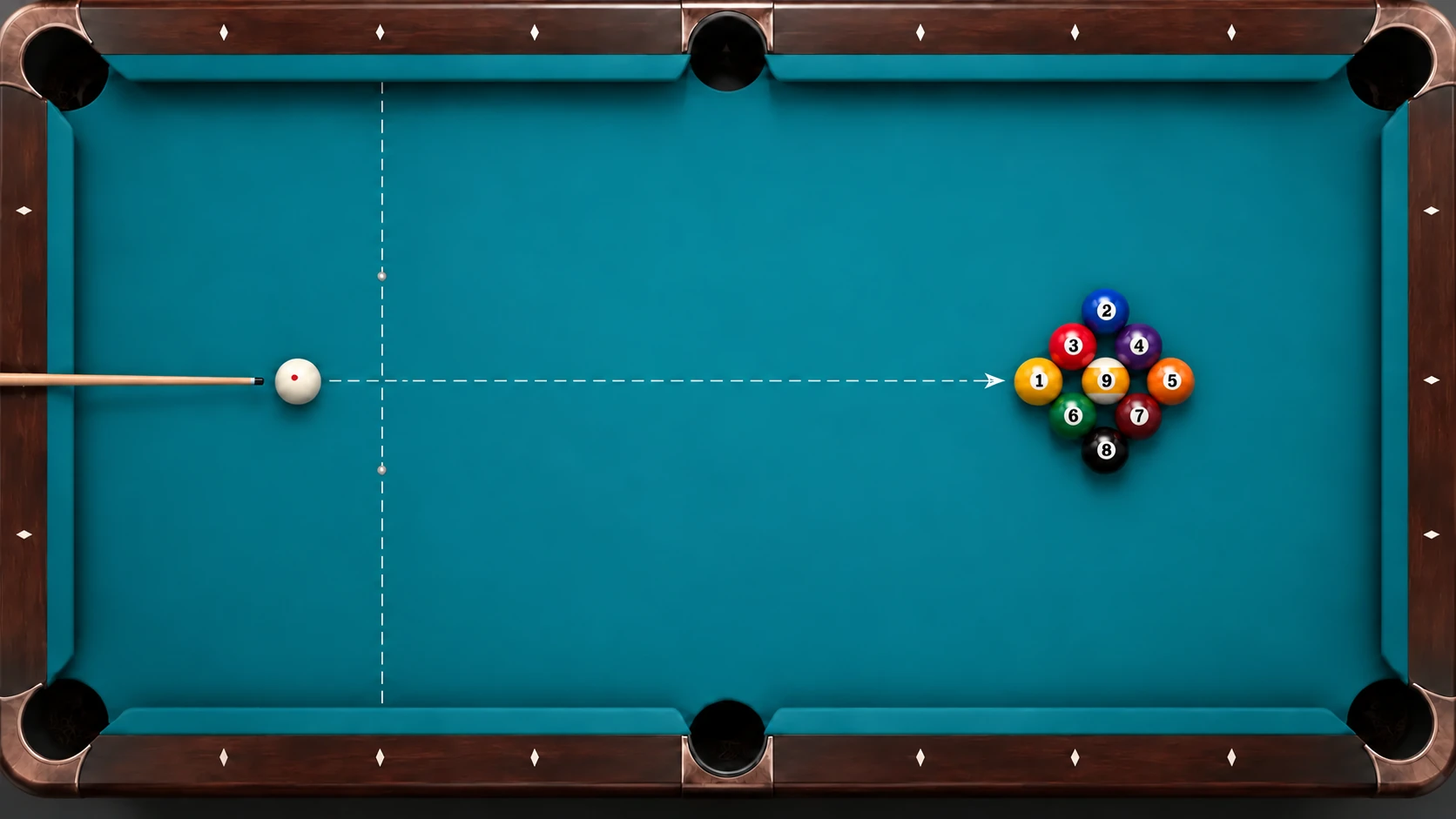
Rack and start the game
Under the current World Pool Association rules effective September 15, 2025, the balls are racked as tightly as possible in a diamond, with the 1 at the apex and the 9 in the middle on the foot spot. Balls 2 through 8 fill the remaining seven positions without a purposeful pattern.
The breaker starts with the cue ball above the head string. Events may add equipment procedures or a break box, so the event sheet controls when it differs from casual house rules.
Hit the lowest-numbered ball first
On every standard shot, the cue ball must first contact the lowest-numbered ball remaining. The object ball that is pocketed does not need to be that ball if the shot is otherwise legal.
After contact, a ball must be pocketed or at least one ball must reach a cushion unless a special rule such as the push-out applies. A player who legally pockets a ball continues.
Know the legal break requirement
The current WPA nine-ball break requires the one to be contacted first. If no ball is pocketed, at least four object balls must be driven to one or more rails; WPA Regulation 16 also governs how many balls must cross the head string in applicable play.
A scratch or illegal break changes possession under the rules. Confirm the exact event procedure before the match instead of relying on a local custom.
Use the push-out deliberately
Immediately after a legal break, the player entitled to the next shot may announce a push-out, whether that is the breaker continuing or the opponent. For that shot, the usual wrong-ball and no-rail foul requirements are suspended, but other fouls still apply and pocketing the nine does not win the rack.
After the push-out, the opponent chooses who shoots next. Place the cue ball where both choices are uncomfortable for the opponent but playable for you; a push-out that offers an easy shot is not strategic.
Handle fouls and the nine ball
A standard foul gives the opponent ball in hand anywhere on the table. Common fouls include scratching, hitting the wrong ball first and failing to drive a ball to a cushion after contact when nothing is pocketed.
Three consecutive fouls can lose the rack after the required warning under WPA rules. A legally pocketed nine normally wins, but exceptions such as a push-out or foul return it according to the rules.
Plan one ball beyond the shot
- Identify the lowest-numbered ball before getting down.
- Choose a legal pocket or safety with a clear cue-ball route.
- Plan position on the next lowest-numbered ball.
- Prefer broad landing zones over exact dots.
- Recheck combinations: the lowest ball must still be struck first.
- Use the published event rules whenever local practice differs.
Sources and further reading
References support the specific factual information above. The practical checklists are Ariakon editorial guidance.