
Games · 3 min read
Try Three Pool Games Beyond Eight-Ball and Nine-Ball
Changing games can expose skills that ordinary rotation practice hides. One-pocket sharpens defense and ball movement, bank pool demands precise cushion judgment, and cutthroat creates an accessible three-player contest. Learn the governing rules before play; house versions can differ.
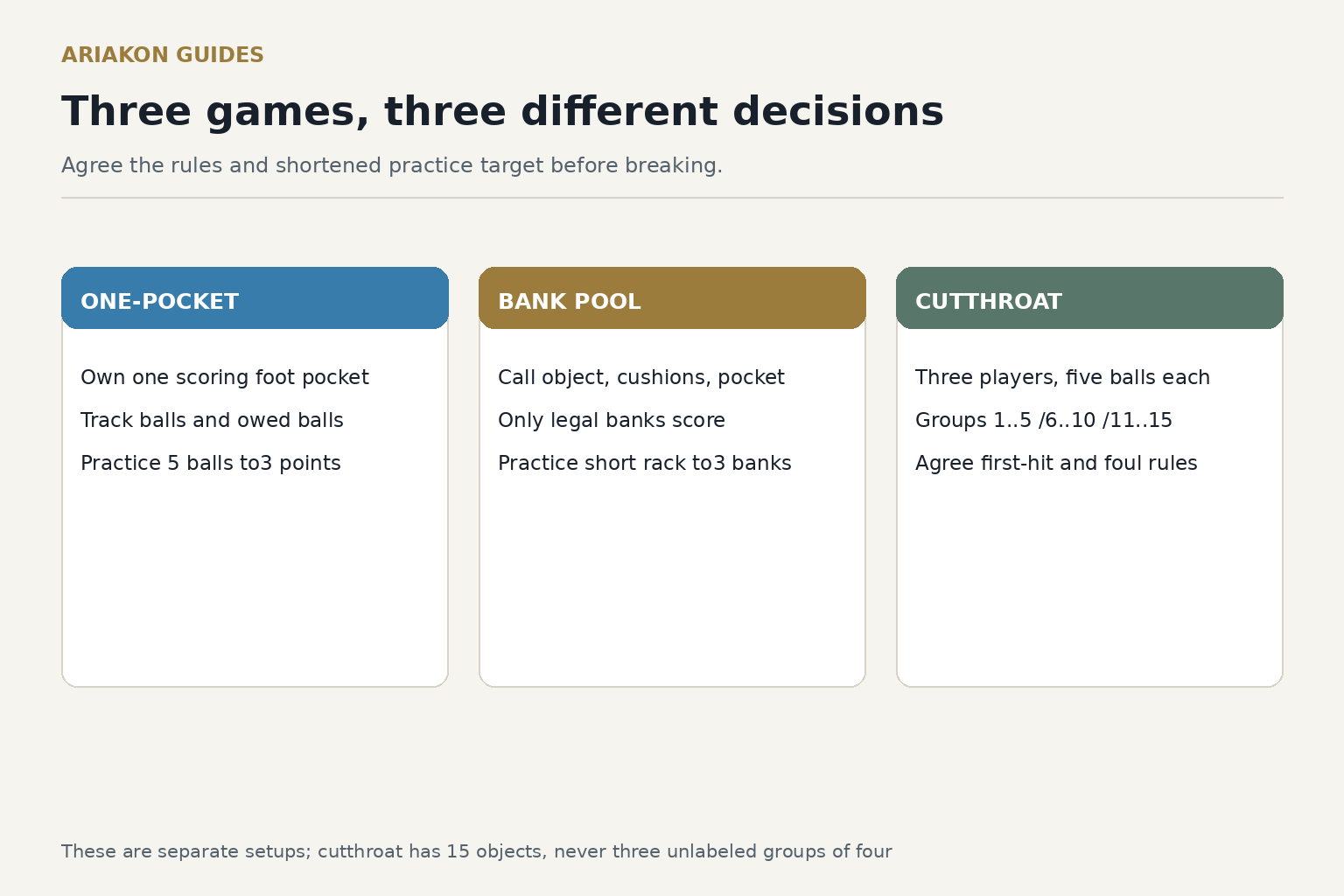
One-pocket: own one scoring pocket
In the current WPA rules, each player is assigned one of the two foot pockets and the first to score eight balls in that pocket wins the rack. Balls legally made in the opponent's pocket count for the opponent, and fouls can require a scored ball to be spotted.
The game rewards cue-ball placement, ball count and patience. For practice, begin with five balls and play to three points. The shorter rack preserves the pocket-ownership decisions without making new players manage a full cluster immediately.
Bank pool: score only called banks
WPA bank pool uses nine or fifteen object balls. A valid scoring shot requires the player to identify the object ball, its intended cushions in order and the pocket. The called ball must meet the rule's clean-contact requirements.
Start with short-rack bank pool and a lower target score. The game teaches object-ball speed and cushion lines because accidental direct pockets do not solve the rack for you.
Cutthroat: protect your group
Cutthroat is commonly played by three people, with each player associated with a group of five balls while trying to remove the opponents' groups. Detailed house rules vary, including group assignment and whether pocketed own balls can return after scratches.
Agree before breaking whether shots must be called, which first contacts are permitted and how scratches affect eliminated balls. Use one written rule set for the entire session rather than resolving differences after a decisive shot.
Match the game to the practice goal
Choose one-pocket when you want safeties, traffic management and patience. Choose bank pool when you want cushion calibration and confident object-ball speed. Choose cutthroat when three players need a continuous game with simple turn rotation.
Do not expect automatic transfer. After the game, name one skill that appeared repeatedly and practice it in a standard eight-ball or nine-ball layout.
Keep scoring and owed balls visible
One-pocket and bank pool may use pocketed balls as physical score markers, and fouls can create owed balls. Keep the two players' scored balls in distinct locations and announce the score before important shots.
For casual play, a small score sheet prevents memory disputes. It also lets you review whether the game ended through scoring, defense or repeated fouls.
Run a three-game sampler
- Play one short one-pocket rack to three points.
- Play one nine-ball bank-pool rack to three banks.
- Play one cutthroat rack using an agreed published rules version.
- Record which game created the most useful unfamiliar decisions.
- Repeat that game next session and practice its hardest recurring shot separately.
Sources and further reading
References support the specific factual information above. The practical checklists are Ariakon editorial guidance.