
Pool physics · 3 min read
Understand How Draw Changes Pool-Ball Throw
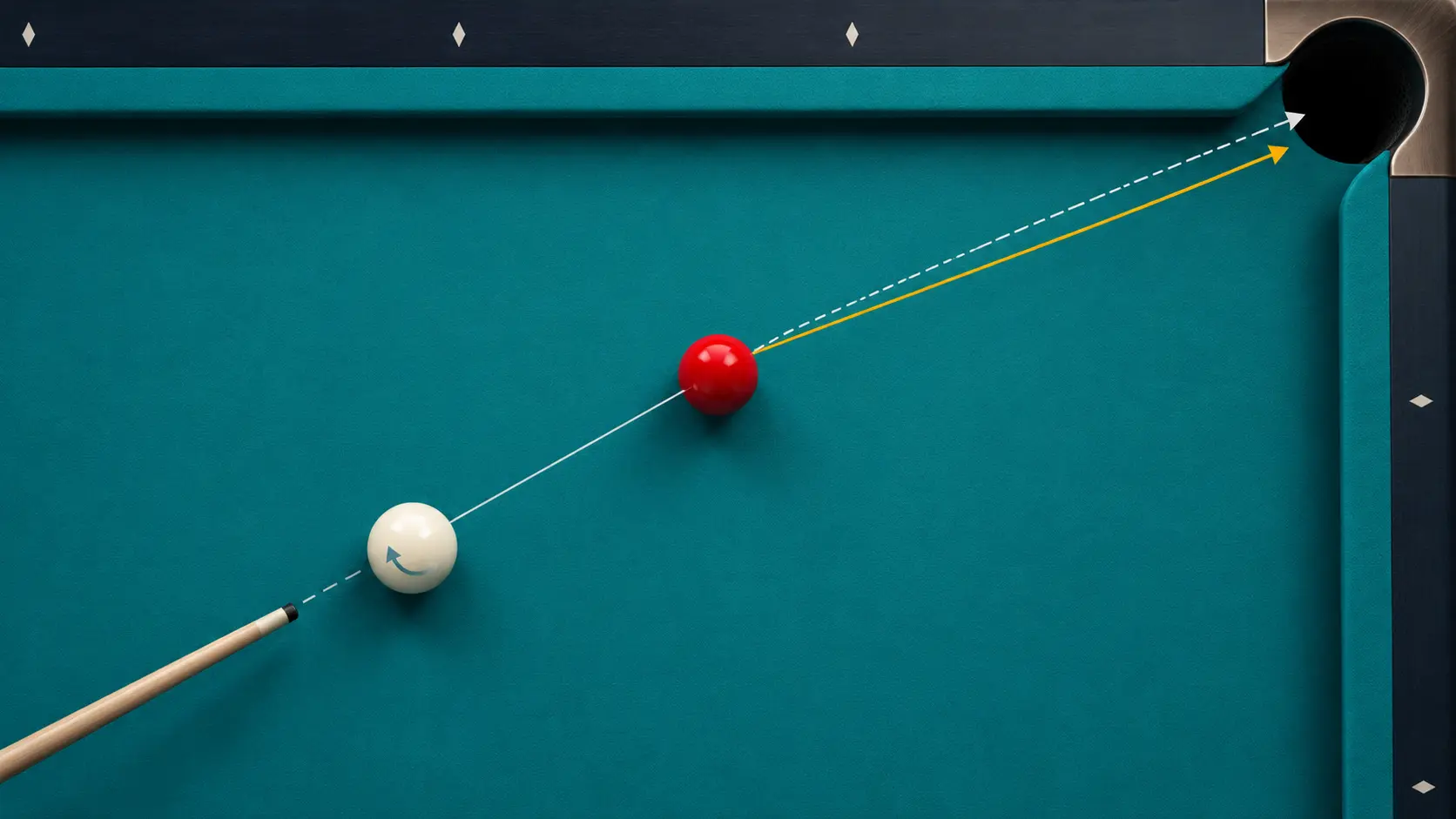
Players sometimes call a missed cut 'draw-induced throw,' but draw does not act like sidespin that simply throws the object ball in one fixed direction. Vertical spin changes the relative motion at the contact patch and therefore changes cut-induced throw. Shot speed, cut angle, retained backspin, ball cleanliness and any sidespin all matter, so the useful skill is controlled calibration.
Begin with cut-induced throw
On a cut shot, friction between the cue ball and object ball can push the object ball away from the pure line-of-centers path. This cut-induced throw usually makes the effective cut smaller than simple geometry predicts.
The amount is not constant. It changes with cut angle, impact speed, spin state and surface conditions, which is why one universal aim correction fails.
Treat draw as a modifier
Backspin changes the direction and speed of surface motion at the ball-to-ball contact patch. In many common cut shots, retained draw reduces cut-induced throw compared with a sliding cue ball at the same impact conditions.
That does not mean every draw shot throws less. A soft shot may lose much of its backspin before impact, and slower impact can increase throw. Judge the cue ball's state at contact, not only the tip position at the start.
Separate speed from spin
Draw shots are often played faster than follow shots, and faster ball-to-ball impact usually reduces throw. If both spin and speed change, the result cannot reveal which variable caused the aim difference.
Use matched-speed tests when learning. Keep the cut angle, ball positions and pocket constant, then compare sliding, draw and follow deliveries that arrive at similar speed.
Leave sidespin out of the first test
Inside or outside sidespin can create spin-induced throw while also changing the cue ball's path through squirt and swerve. That makes a draw comparison much harder to interpret.
Start on the vertical axis. Add sidespin only after you can reproduce the center-axis shot and understand the separate aim compensation your cue and table require.
Control ball condition and cling
Chalk or dirt at the contact point can create an unusually large throw event often called cling, skid or kick. One surprising miss is not proof that your draw correction was wrong.
Use clean, matched balls for calibration, inspect visible chalk marks and repeat the shot enough times to distinguish a pattern from an isolated dirty contact.
Run a three-state throw test
- Set a repeatable medium cut with clean balls.
- Mark the positions with removable reinforcements.
- Shoot five sliding center-axis shots.
- Shoot five draw shots at matched impact speed.
- Shoot five follow shots at matched impact speed.
- Record pocket entry and change aim only after a repeatable pattern.