
Pool practice · 3 min read
Choose Pool Training Tools by the Feedback They Provide
A useful training tool shortens the path from a missed result to a specific adjustment. It does not need to be expensive or electronic. A marked cue ball, removable target, camera, score sheet or structured drill can all help when each is assigned one diagnostic job.
Name the question before choosing the tool
Start with an observable problem: the cue tip is not landing where intended, the cue is crossing the shot line, the cue ball is missing a speed zone or a pattern choice keeps breaking down. A tool is useful only if it makes that problem easier to see or measure.
Avoid buying a general promise to improve. Write one sentence describing the evidence you need, then choose the simplest aid that can produce it.
Match common tools to a kind of feedback
- A marked practice ball can reveal actual tip-contact location and unwanted spin.
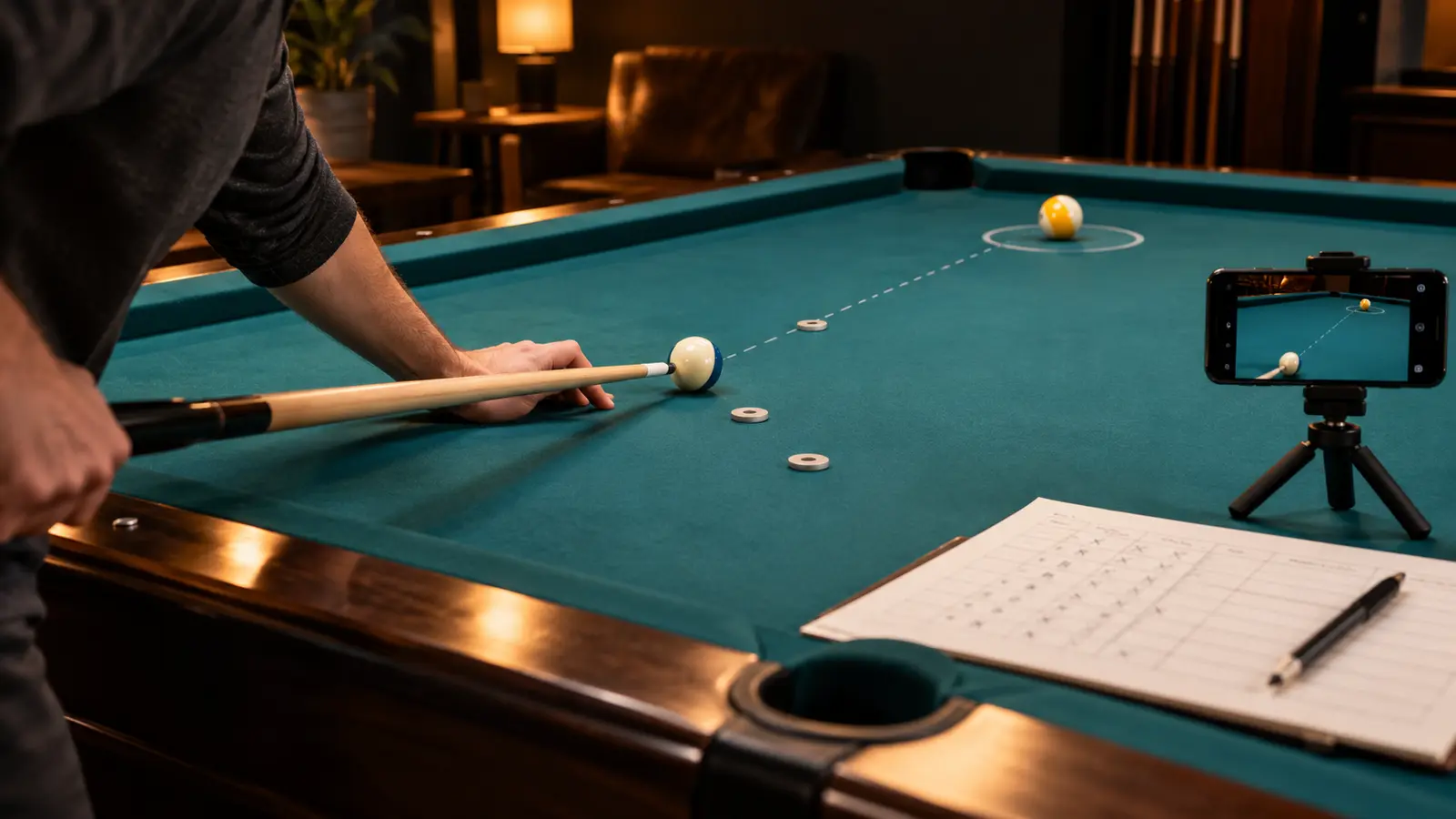
- A phone camera can show alignment, cue path and finish position when placed safely off the table.
- Removable position markers can make ball placement and target zones repeatable.
- A score sheet can separate a memorable shot from a repeatable result.
- A mirror or straight reference can expose setup drift without prescribing a single body shape.
- A structured exam can sample several skills and identify what deserves focused practice next.
Protect the table and the evidence
Ask the table owner before placing any marker, training ball or accessory on the cloth. Use only clean, non-damaging aids designed for the surface, and keep tripods, drinks and hard objects away from rails and playing areas.
Keep the camera angle, ball positions and scoring rule constant within a comparison. A tool cannot clarify a pattern when the setup changes every attempt.
Run a small comparison
Take a short baseline without coaching yourself between attempts. Then use the tool to identify one change and repeat the same set. Record pocket result, cue-ball finish or the specific error the tool was chosen to reveal.
Improvement in one short set is not proof that a product caused lasting skill. Repeat on another day and test the skill in a normal rack before keeping the change.
Know when the tool has finished its job
A good aid can become a distraction when the player watches the device instead of the shot. Once the feedback is understood, alternate measured repetitions with ordinary play and see whether the behavior transfers.
Retire or rotate a tool when it no longer changes the next practice decision. More feedback is not automatically better feedback.
Use a five-question buying check
- What exact error or skill will this tool reveal?
- Can a simple marker, camera or score sheet answer the same question?
- Will it work safely on the table and in the room where I practice?
- Does it produce a result I can compare over time?
- What will I do differently after seeing the result?