
Break technique · 3 min read
Calibrate a Legal, Controllable Ten-Ball Break
A productive ten-ball break starts with legality and a repeatable rack, then balances a pocketed ball with a playable cue ball. More speed is useful only while contact quality survives. Calibrate the table and event rules in front of you instead of copying one professional break position without context.
Start with the current rules
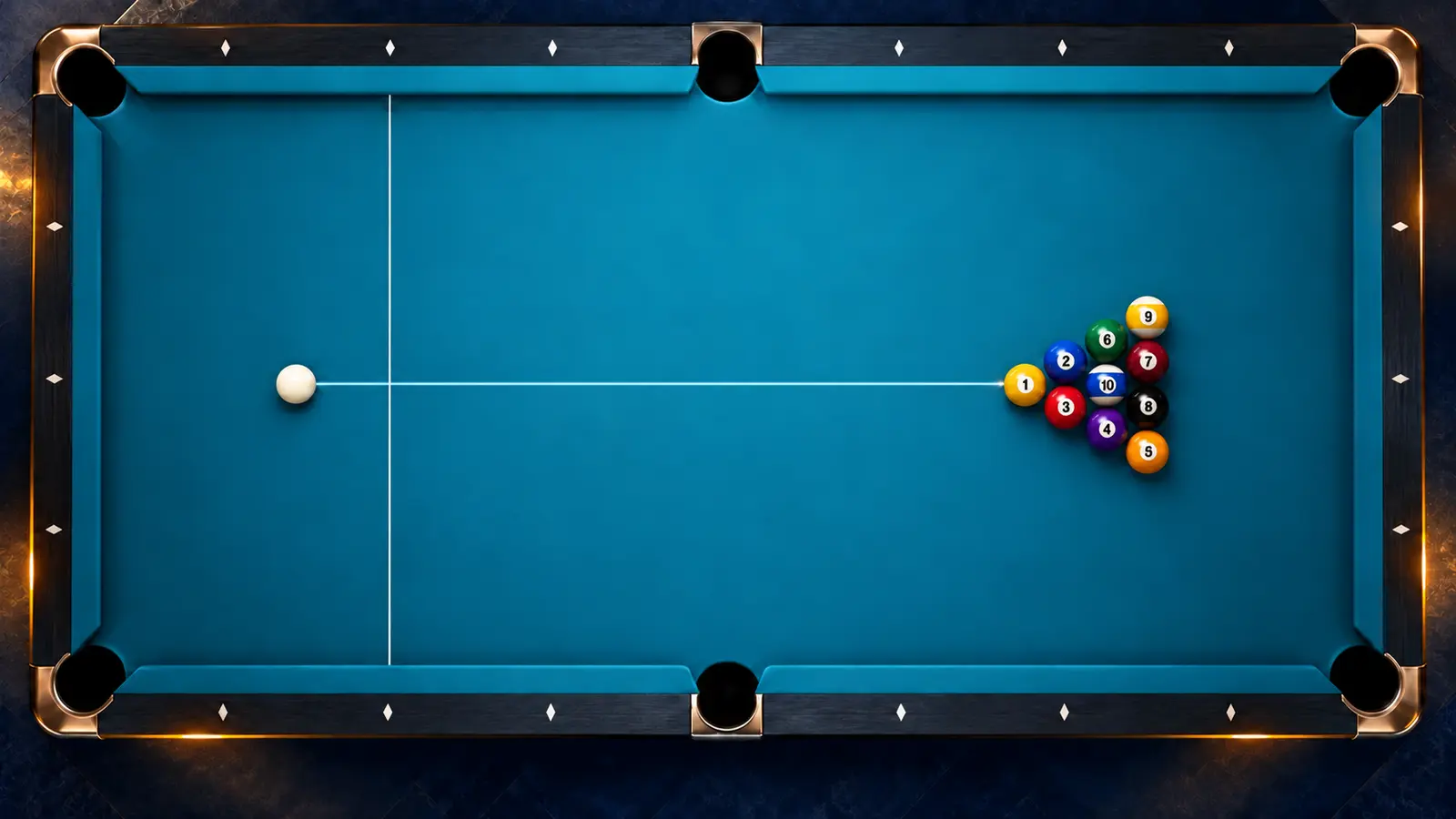
Under the current WPA Rules of Play, the 1-ball is at the apex on the foot spot and the 10-ball is in the middle of a tight triangular rack. The cue ball begins in hand above the head string.
If no object ball is pocketed, at least four object balls must be driven to one or more rails or the break is a foul. Event rules can add a break box, alternate-break format, template procedure or other administration, so read the player guide.
Remove rack variation first
Use the event's required rack and procedure. Confirm the balls are frozen as closely as the equipment allows and that the apex and 10-ball are placed correctly. Do not pattern the remaining balls intentionally when the rules prohibit it.
Record obvious gaps rather than changing speed to compensate for a poor rack. In competition, use the permitted inspection or referee process instead of touching an opponent's rack without authorization.
Establish a square-contact baseline
Begin near the center of the head string and use a speed that lets you hit the 1-ball squarely. Watch the cue ball: a small sideways departure reveals off-center head-ball contact even when the rack spreads well.
Score the legal break, cue-ball finish and next-shot quality separately from balls pocketed. A powerful break that scratches or loses the cue ball is not yet calibrated.
Move one variable at a time
After five comparable breaks, adjust either cue-ball position, tip height or speed—not all three. If you move the cue ball, use quarter-diamond steps and keep the square head-ball hit as the first acceptance gate. Record where the two second-row balls travel instead of assuming either side pocket is guaranteed.
Treat every observed route as table-specific evidence. Cloth, balls, rack quality and event restrictions change outcomes. Return to the baseline when the new position reduces legal contact or cue-ball control.
Use a controlled speed ladder
Break five racks at a controlled speed, five slightly faster and five at the fastest speed that retains square contact. Keep the rack procedure and cue-ball position fixed.
Choose the lowest speed band that produces acceptable spread and a playable cue ball consistently. Maximum effort is not the target; repeatable energy transfer is.
Track ten-ball break outcomes
- Legal break or foul.
- Head-ball contact quality.
- Cue-ball finish zone or scratch.
- Number and identity of pocketed balls.
- Open shot, push-out decision or no shot.
- Rack gaps, template movement or table conditions.
Sources and further reading
References support the specific factual information above. The practical checklists are Ariakon editorial guidance.