
Pool community · 2 min read
Build a Welcoming Local Pool Community
A strong pool community is built through repeated, low-friction invitations rather than a single promotional event. New players need to know where to go, what participation costs, what equipment is available and how they will be treated. Clear expectations and visible sportsmanship turn a first visit into a realistic second one.
Publish the practical details
Every invitation should name the venue, date, start and likely end time, entry or table cost, game format, equipment expectations, accessibility contact and whether beginners can attend alone.
Use current facts and a reachable organizer. If a detail may change, say when it will be confirmed rather than filling the gap with a guess.
Design a first-hour experience
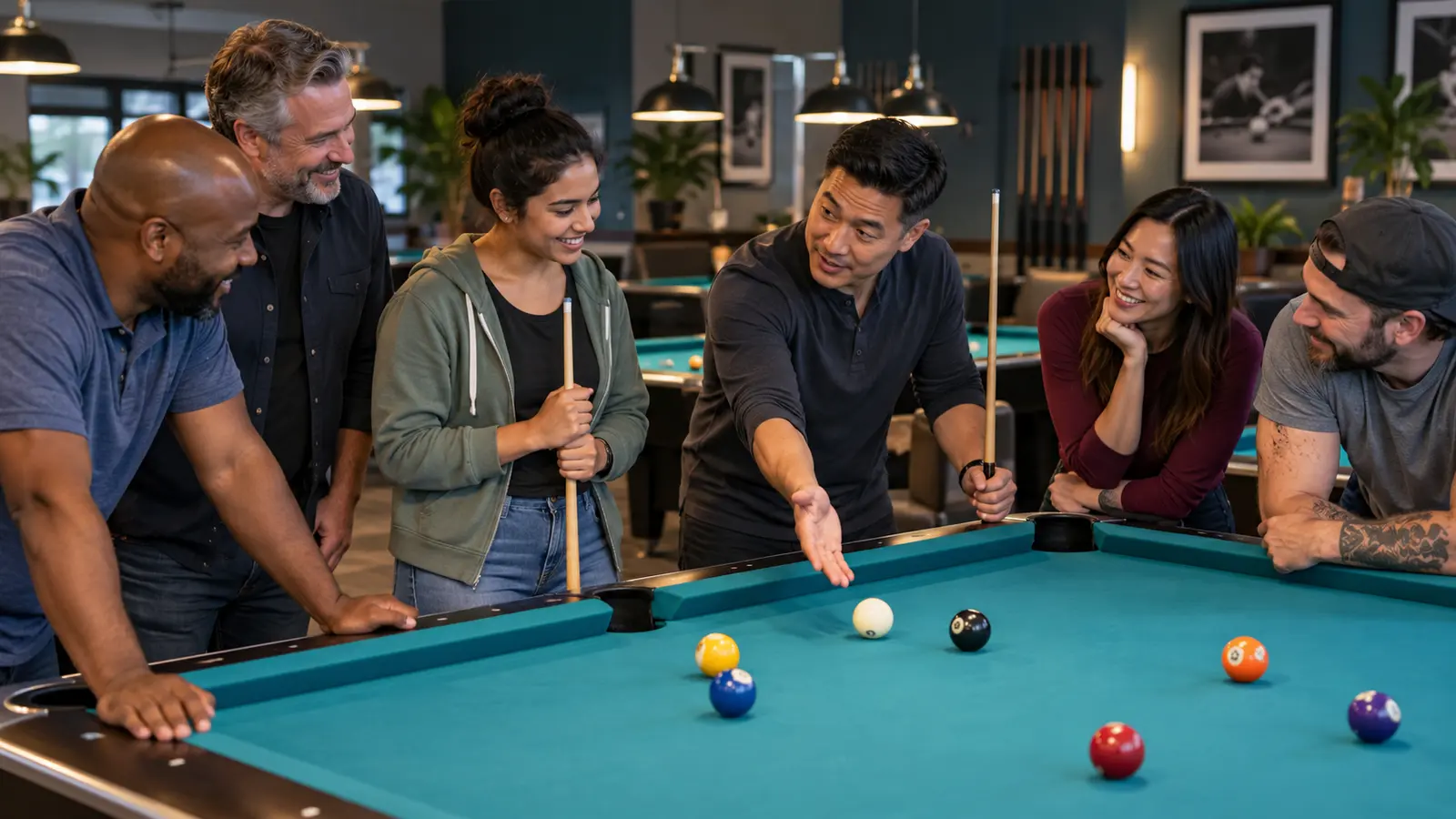
Assign one host to greet newcomers, explain the room and introduce a first partner. A person should not have to decode a bracket, house rules and table etiquette while standing alone.
Start with a short shared activity: a cooperative drill, a rules orientation or a rotating mini-game. Keep the first task achievable and explain how to join regular play afterward.
Make conduct visible
State that respectful behavior, honest scoring and care for shared equipment apply to every skill level. Experienced players set the tone by giving opponents space, avoiding disruptive coaching and handling disputes through the event’s stated process.
Provide a named route for questions or concerns. A code of conduct only helps when participants know who will act on it.
Offer more than one way to belong
Not everyone wants immediate competition. Include roles such as practice partner, scorekeeper, setup helper, photographer with consent, rules learner or event volunteer.
Rotate partners and avoid letting one established group occupy every conversation or table. Skill-based pairings can support learning without labeling beginners as a burden.
Follow up with permission
At the end, tell participants the next concrete opportunity and ask whether they want updates. Use the contact method and frequency they agreed to; do not add attendees to unrelated marketing lists.
Ask one short feedback question: what made it easy or hard to participate? Track repeated answers and fix one access problem before the next event.
Use the welcome checklist
- Post complete logistics and costs.
- Name a host and concern contact.
- Plan a beginner-friendly first activity.
- Explain conduct and local rules.
- Create playing and non-playing roles.
- Ask permission before sending follow-up updates.