
Match preparation · 3 min read
Build a First Rack Readiness Checklist for Pool Matches
The first rack begins before the first object ball is struck. A player may still need to confirm the discipline, break order, rack procedure, push-out or call-shot requirements, equipment condition and the table's speed. This checklist is a practice template—not an official warm-up entitlement—and must yield to the event's schedule and rules.
Separate match readiness from the shot routine
A pre-shot routine decides and delivers one shot. First-rack readiness handles the match environment: active rules, race format, break format, equipment, table references and the opening decision. Complete it before the lag or before the official calls players when no lag is used.
Use only the warm-up time the event actually permits. If no table time is available, run the rules, equipment and opening-plan checks off the table. WPA's current rules state that players remain responsible for knowing applicable regulations even when officials try to make them available.
Use the repeatable pre-shot routine after the match begins for individual shot execution.
Review player responsibilities across the match for the broader conduct checklist.
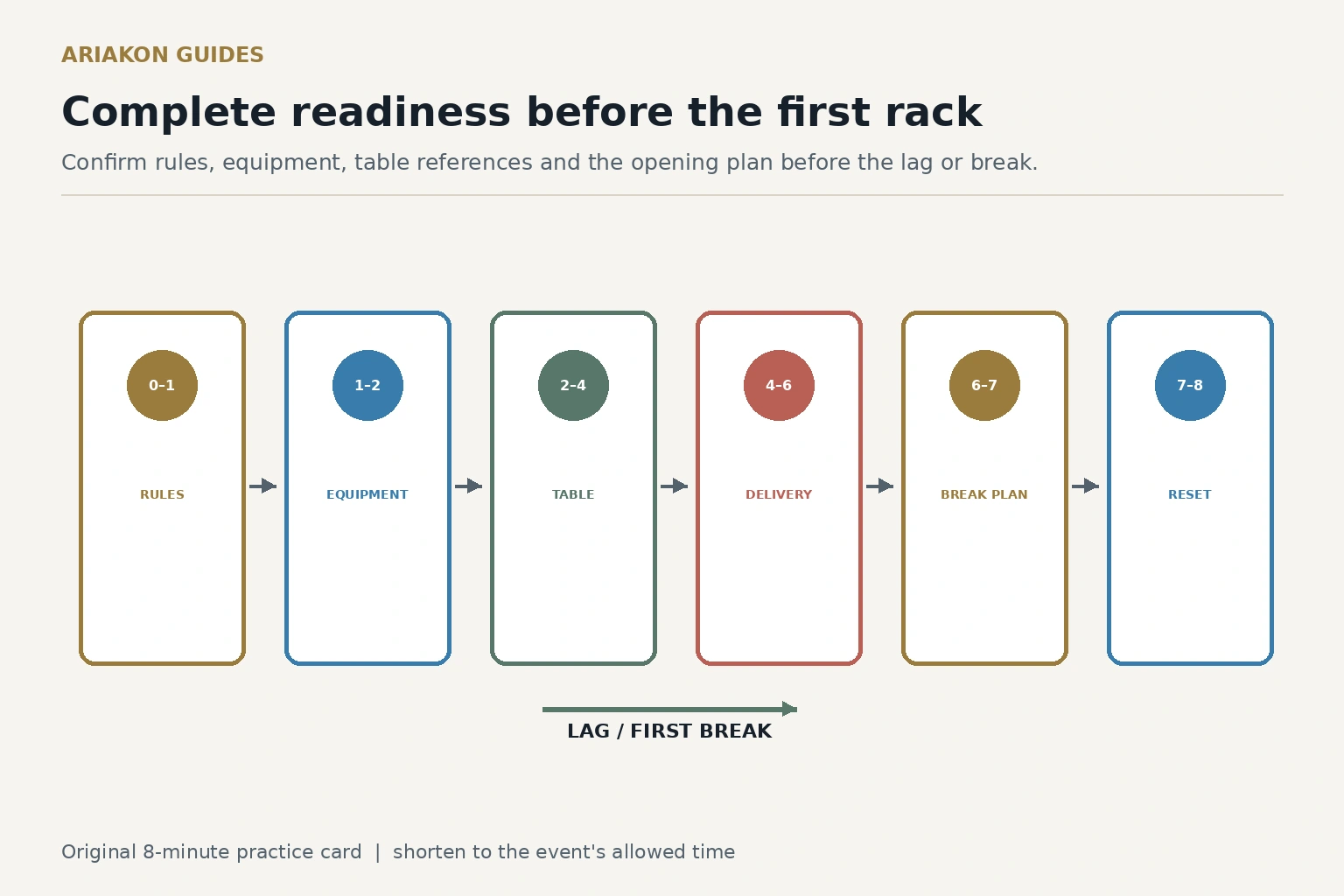
Run an eight-minute readiness card
| Time | Task | Ready evidence |
|---|---|---|
| 0:00–1:00 | Rules and format | Discipline, race, breaks, call rules and shot clock confirmed |
| 1:00–2:00 | Cue and personal kit | Tip, joint, extension, chalk and towel checked |
| 2:00–4:00 | Table reference | One lag-speed roll and one pocket-speed roll observed |
| 4:00–6:00 | Delivery reference | Two straight center-ball shots with normal routine |
| 6:00–7:00 | Break and rack plan | Legal start, rack process and cue-ball intention named |
| 7:00–8:00 | Reset | Water, breathing cue and first decision stated |
Practice the checklist as a scored simulation
Run the full simulation three times on separate practice days. Each simulation starts with an empty checklist and ends at a lag plus one legal opening break under the chosen discipline. Do not keep adding warm-up balls after the clock expires.
| Points | Requirement |
|---|---|
| 4 | Rules and format stated correctly |
| 4 | Equipment check completed before table work |
| 4 | Two table-speed observations recorded |
| 4 | Opening break/rack plan matches the selected rules |
| 4 | Simulation begins on time without extra rescue shots |
| Maximum 60 | Three complete simulations |
Use stop points instead of improvising
| Finding | Action before play |
|---|---|
| Rule or break format unclear | Ask the tournament official or opponent before the lag |
| Loose tip, damaged cue or unsafe extension | Switch to verified equipment or seek service |
| Table plays faster or slower | Change the landing reference, not the whole stroke |
| Warm-up time ends | Stop immediately and preserve the best verified reference |
| Opening plan feels uncertain | Choose the simplest legal break and cue-ball intention |
Worked example and real-match transfer
A hypothetical player completes the first simulation in eleven minutes because equipment is checked after the warm-up and four extra break shots are added. The second attempt moves equipment to minute one and stops at eight minutes, scoring 18/20. The checklist improved time discipline rather than claiming the later break result was caused by one ritual.
On match day, carry one compact card and check only the items the event permits. Record after the match whether any missing pre-match information affected the first rack. Revise the card between events, never during a rack.
Sources and further reading
References support the specific factual information above. The practical checklists are Ariakon editorial guidance.