
Cue equipment · 3 min read
Adjust to a Low-Deflection Pool Shaft With Controlled Tests
Low deflection means less cue-ball squirt from an off-center hit, not zero deflection and not automatic accuracy. If you learned sidespin with a higher-squirt shaft, your old visual compensation may now be too large. A controlled comparison is faster and more honest than guessing from a few game shots.
Define what changed
Squirt is the cue ball's immediate sideways departure from the cue direction after an off-center hit. Low-squirt, often marketed as low-deflection, shafts reduce that effect, so less aim compensation is generally required for sidespin.
The shaft does not remove swerve, throw, stroke error or table effects. The final object-ball result can combine all of them, which is why one missed cut is a poor equipment test.
Start with a center-ball baseline
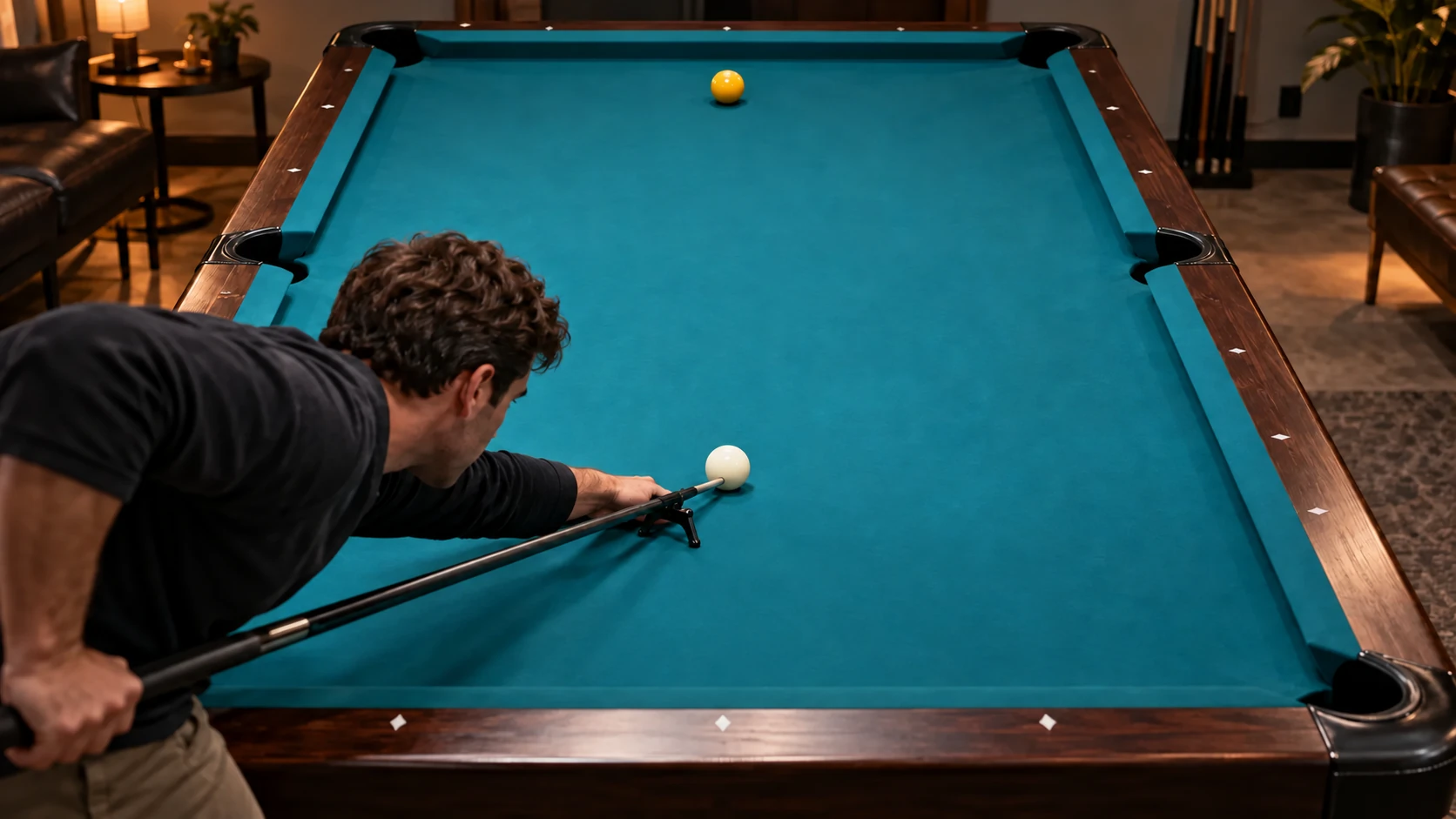
Set up a straight shot and repeat it at a comfortable speed with the same bridge length and cue elevation. Center-ball results reveal alignment and delivery without intentionally adding squirt compensation.
If the center-ball baseline is unstable, fix the setup or stroke before interpreting left- and right-spin results. A new shaft cannot be evaluated through a moving test.
Change one variable at a time
Mark one modest tip offset, one speed and one distance. Shoot a small group with left spin and a matching group with right spin. Restore the balls carefully and record the dominant miss direction rather than remembering only the worst shot.
Then change either speed or distance, not both. Slower or longer shots give swerve more time to act, so the net path may differ even when the shaft's squirt has not changed.
Replace the old compensation gradually
A player accustomed to a higher-squirt shaft may continue aiming away from the intended line by the old amount. With a lower-squirt shaft, that correction can become an overcorrection.
Use the grouped result to reduce the compensation in small steps. Keep successful notes for distinct shot families instead of searching for one universal offset.
Delay pivot systems until the baseline is clear
Back-hand and front-hand english are aim-and-pivot methods that depend on bridge length, shaft behavior, speed, distance and swerve. They can be useful, but adding them before the basic test is repeatable introduces more variables.
First learn what the shaft does with your normal straight stroke. Then calibrate any pivot method deliberately across the range of shots you actually use.
Use a three-session transition
- Session one: stabilize center-ball alignment, stop shots and speed.
- Session two: compare equal left and right offsets at fixed distance and speed.
- Session three: vary one distance or speed and record the changed compensation.
- Keep bridge length, elevation and tip offset consistent within each group.
- Retest on a different table before treating a compensation as universal.
- Choose the shaft only after judging control, feel and repeatability together.