
Table conditions · 2 min read
Adapt to Difficult Pool Table Conditions Without Guessing
An unfamiliar table may play slower, faster, shorter off the cushions or less forgiving at pocket speed. Complaining does not predict the next shot. A short, permitted calibration gives you evidence, while simpler routes and wider position zones reduce dependence on uncertain conditions.
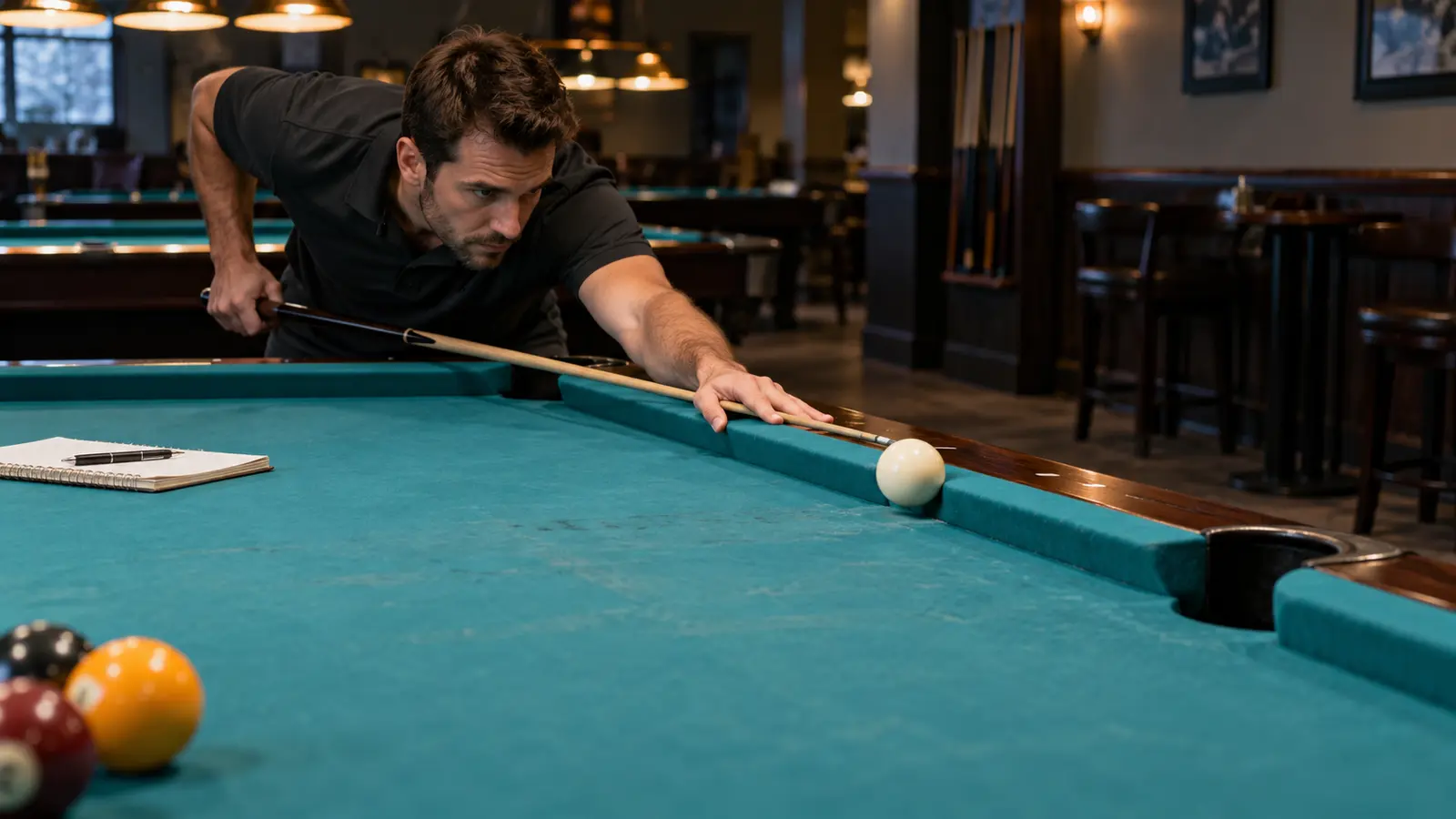
Inspect without altering the table
Before play, look for visible cloth wear, debris, loose cushions, damaged pockets, uneven seams or an out-of-level roll. Tell the operator or official about a material problem instead of attempting a repair or cleaning the table without permission.
Confirm warm-up time, equipment rules and whether a ball set or rack procedure can be corrected. The event rules and official decide what may change.
Run four baseline tests
If warm-up is allowed, lag a ball to measure speed, shoot a simple stop shot, roll a cue ball slowly along more than one line and test one familiar bank or kick. Use ordinary legal strokes rather than extreme shots.
Record only repeatable effects. One roll can come from stroke error or debris; the same result from opposite directions is more useful evidence.
Adjust for cloth and humidity
Cloth speed affects how far the cue ball travels and how much power a route needs. Humid or dirty conditions can increase friction and alter draw, spin retention, throw and bank behavior.
Make small speed changes and retest. Avoid solving a slow table by hitting every shot hard, because higher speed narrows pocket acceptance and can magnify position errors.
Respect cushion and pocket response
If banks consistently return short or long, update the aim from the measured result rather than the remembered line from another table. Reduce multi-cushion routes when the rail response is uncertain.
Tight or worn pockets reward center-pocket speed. Choose a slightly longer position that offers a fuller pocket instead of forcing the cue ball into a tiny zone near a rail.
Simplify the game plan
Favor center-ball hits, modest speeds and one-cushion position routes until the table is understood. Use sidespin only where its benefit exceeds the added uncertainty from squirt, swerve, throw and cushion reaction.
A safety can be the correct response when a run requires several untested speed-sensitive routes. Apply the same conditions to both players and keep the focus on the next controllable decision.
Use a ten-minute condition card
- Confirm the rules and report material defects.
- Lag once in each direction for speed.
- Test a center-ball stop and a slow roll.
- Check one familiar cushion angle.
- Note only repeatable speed, roll and rail behavior.
- Begin with simple routes and recalibrate as evidence grows.
Sources and further reading
References support the specific factual information above. The practical checklists are Ariakon editorial guidance.