
Competition · 4 min read
Win and Lose Pool Matches Without Damaging Relationships
A hard-fought pool match can test a friendship, team relationship or regular practice partnership because the players are managing two things at once: a fair contest and a continuing relationship. Good conduct is not pretending the result does not matter. It is keeping the rules, emotions and conversation clear enough that both people can compete fully and still want to play again.
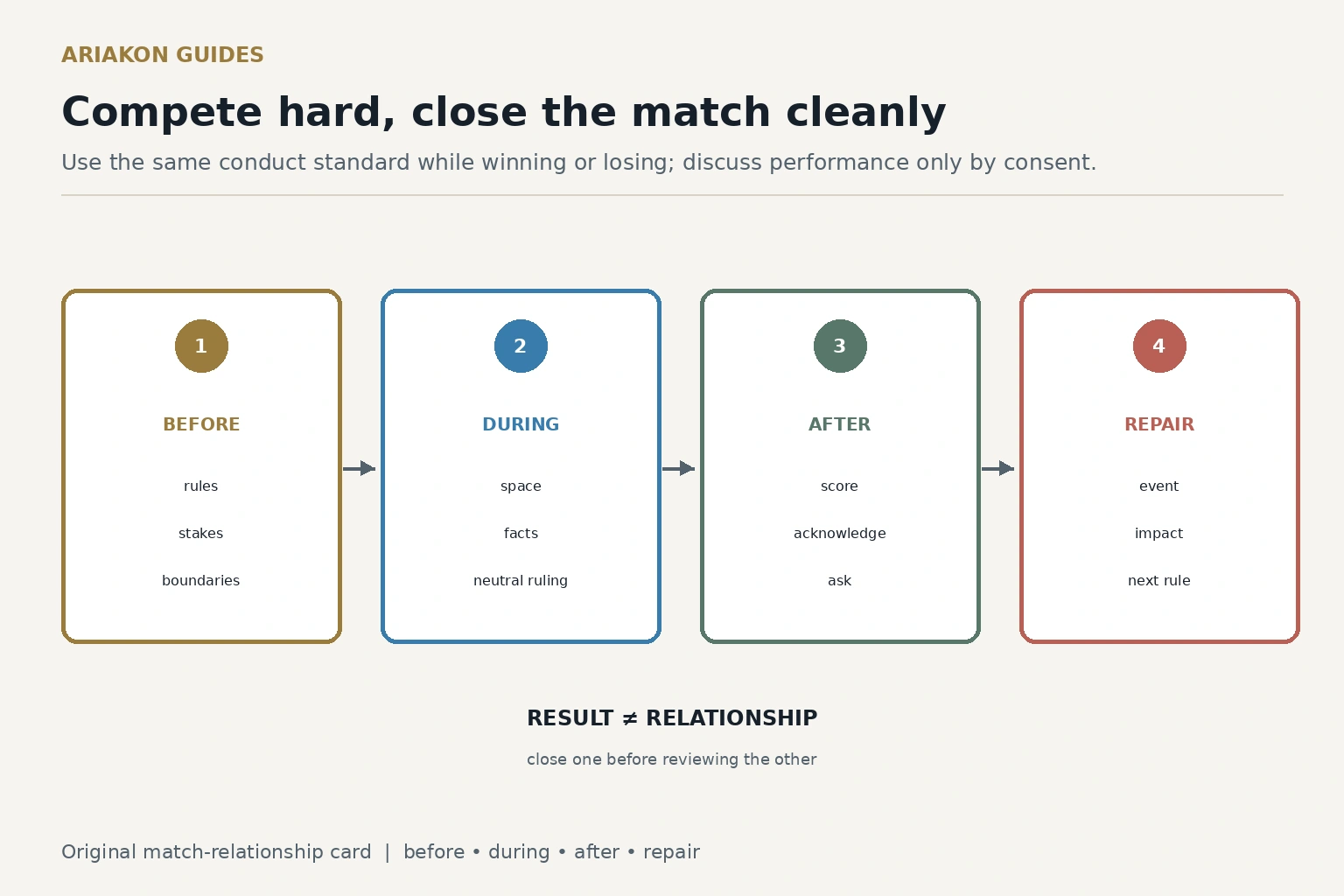
Make a two-minute agreement before the lag
Confirm the game, race, break format, call-shot expectations, foul procedure, timeouts, coaching and who resolves a disputed ruling. If a league or tournament ruleset governs the match, use it instead of improvising a house compromise after a problem occurs. Name any informal differences before the first rack.
For a friendly match, also agree on the stake, stopping point and whether post-shot advice is welcome. A clear agreement protects the relationship because neither player has to interpret silence while frustrated. It also separates a rules question from a judgment about the other person's character.
| Confirm | Write or say |
|---|---|
| Format | Game, race, break and call-shot rules |
| Rulings | Active ruleset and neutral decision path |
| Boundaries | Coaching, conversation and device use |
| Result | How the score is confirmed and recorded |
| Afterward | Whether feedback is invited now, later or not today |
Check shared-table etiquette for shooter space, pace, fouls and equipment care.
Confirm a player’s match responsibilities for a broader three-phase competition checklist.
Use the same conduct standard while ahead or behind
Stay outside the shooter's sight line, acknowledge called fouls, avoid result commentary during the rack and direct a disputed rule to the agreed process. Do not turn a fortunate roll, missed easy ball or large lead into commentary about the opponent. The standard is symmetric: the winner does not gloat and the loser does not punish the room with silence, equipment abuse or an argument that arrives only after losing.
If emotion rises, use one factual sentence: ‘I need the rule checked before we continue,’ or ‘I need a minute within the allowed break.’ Avoid motive claims such as ‘you always cheat’ or ‘you wanted me to miss.’ Current WPA rules treat intentional behavior that disrupts fair play as unsportsmanlike conduct; the event official, not either player's anger, determines the remedy.
Close the result before reviewing the match
A handshake is customary in many settings but should not be forced when illness, culture or personal boundaries make another acknowledgement more appropriate. The useful behavior is clear closure, not a particular gesture. The winner should not demand praise; the loser should not make continued friendship conditional on an apology for playing well.
| Step | Neutral action |
|---|---|
| 1. Confirm | State the final score and resolve the score sheet |
| 2. Acknowledge | Offer a brief good-match or thank-you statement |
| 3. Separate | Put cues and shared equipment away safely |
| 4. Ask | ‘Do you want to discuss the match now or later?’ |
| 5. Leave | If either player declines, end the review without pursuit |
Repair a bad ending with facts, impact and a next rule
If a match ends badly, wait until both people can speak normally. Describe one observable event, its impact and one specific future agreement. Example: ‘After the final rack, I raised my voice about the push-out. That made the finish hostile. Next time I will ask for the tournament director before the next shot.’ This owns behavior without relitigating every ball.
A useful repair does not require agreement about intention. The other player may describe a different impact. If conduct involved threats, harassment, deliberate damage or safety concerns, stop direct negotiation and use the venue, league or event reporting process. Relationship preservation never requires accepting unsafe behavior.
| Question | 0 | 1 | 2 |
|---|---|---|---|
| Rules confirmed first? | No | Partial | Yes |
| Shooter space protected? | Repeated issue | One issue | Yes |
| Dispute used agreed path? | No | Late | Yes |
| Result closed cleanly? | No | Delayed | Yes |
| Feedback boundaries respected? | No | Unclear | Yes |
| Maximum 10 | Choose one repair action |
Worked example: a disputed hit after the hill game
Two friends play a race to seven under an agreed league ruleset. At 6–6, one believes a rail was missed. Instead of shooting while arguing, they pause and ask the available official. The official rules the shot legal. The losing player records 7–6, says ‘good match’ and asks to talk tomorrow rather than analyzing the ruling while angry.
The next day the review scores 8 of 10: the rules path and result were clean, but both players talked over each other before the official arrived. Their single next agreement is that only the incoming player asks the official a factual question. The match result remains unchanged; the relationship improves because the repair targets one behavior.
Sources and further reading
References support the specific factual information above. The practical checklists are Ariakon editorial guidance.