
Stroke · 3 min read
Use a Set Position Pause to Check Pool Shot Readiness
A set pause is a short moment of stillness at final address before the last backswing. It can separate aiming and warm-up movement from committed delivery, but longer is not automatically better. The useful pause is comfortable enough to repeat and clear enough to answer three questions: does the picture look right, is the body quiet and is the speed plan settled? If any answer is no, stand up instead of freezing over the cue ball.
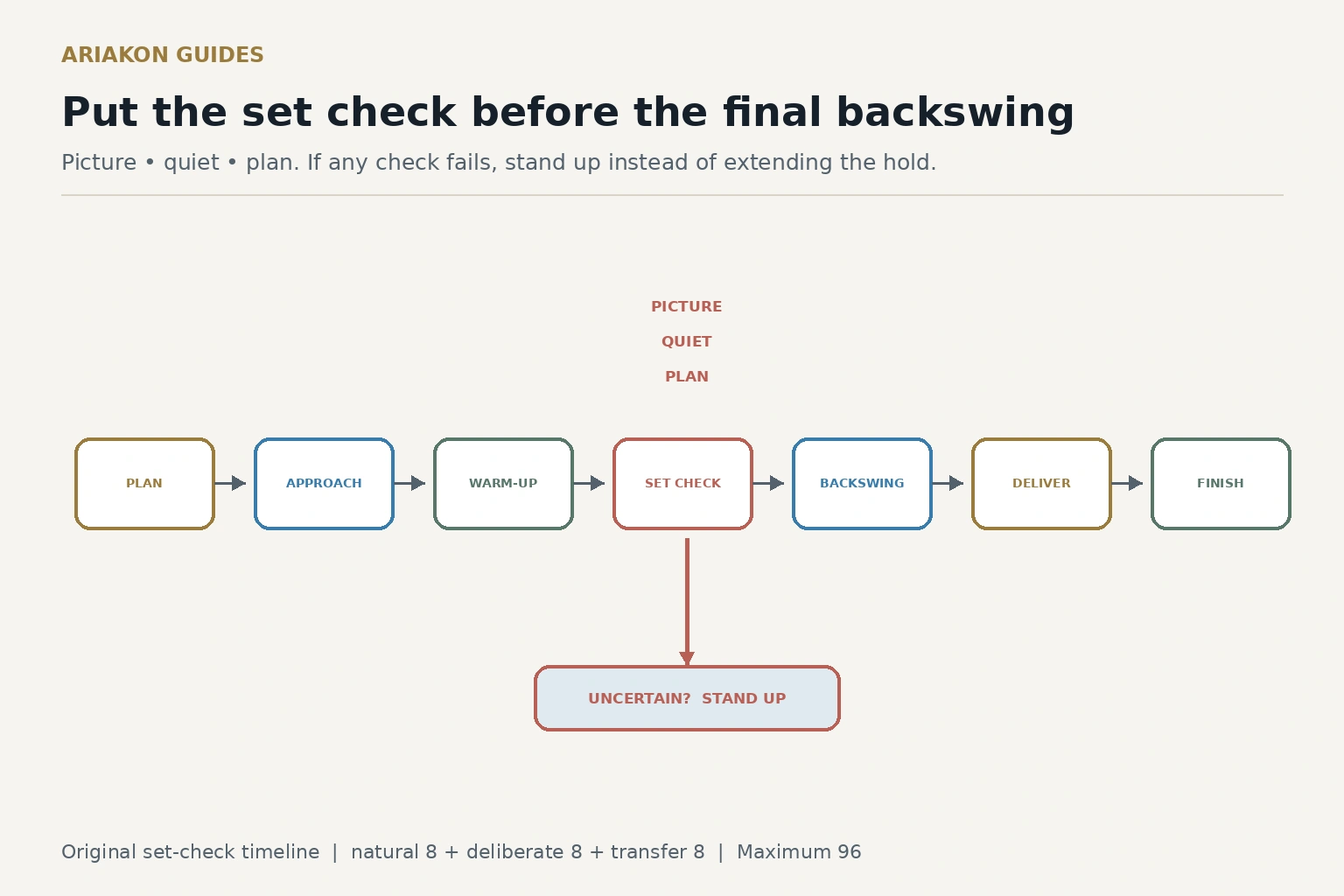
Place the checkpoint in the complete routine
Choose line, speed and spin while standing. Enter the stance, settle the bridge and use the normal number of warm-up strokes. At the end of the last forward warm-up, let the cue become still near the cue ball without touching it. Check picture, quiet and plan, then begin the final backswing. Do not hold your breath deliberately, count toward discomfort or turn stillness into a contest.
The set at final address and the change of direction after the final backswing are separate moments. This drill isolates the first. Keep the broader pre-shot routine intact instead of treating one pause as the whole process.
Build the complete pre-shot routine before treating one pause as the whole routine.
Practice a relaxed stroke if the checkpoint produces grip pressure or shoulder tension.
Mark one straight stop-shot station
Put the object ball about one diamond from a corner and the cue ball one diamond straight behind it. Mark both centers with removable reinforcements and remove all loose markers before shooting. Mark a one-ball-wide stop window centered on the cue-ball center at object-ball contact, one ball diameter behind the object-ball center on the incoming straight line. Use center-ball contact and one comfortable speed.
Shoot four unscored calibration balls. Choose a personal pause cue that does not depend on exact clock time, such as still–check–go. Video can reveal gross rhythm changes, but this drill does not claim frame-perfect pause timing.
Run three eight-shot blocks
Reset the fixed station for Blocks A and B. For Block C, keep the object ball at its mark and move the cue ball one ball-width left or right on alternating attempts. Call the pocket and a broad cue-ball finish zone. If the sight picture or body feels wrong at set, stand up, reset and record restart rather than forcing the attempt.
| Block | Attempts | Instruction |
|---|---|---|
| A: natural | 8 | Use the normal routine; record whether a still set occurs |
| B: deliberate | 8 | Use the same personal set cue before every final backswing |
| C: transfer | 8 | Alternate straight stop and slight-cut position shots; keep the set cue |
Score readiness separately from outcome
Worked example: natural Block A scores 21 of 32 with three shots delivered before the picture settled. Deliberate Block B scores 27, with all eight set points and two successful stand-up restarts. Transfer Block C scores 23; two misses follow a pause that becomes visibly long and tense. The next action is to keep the short personal cue and repeat the alternating cuts—not to lengthen the hold.
If pocketing improves but stop-window control falls, the checkpoint may be redirecting attention away from speed. If both execution columns fall while restarts rise, return to easier shots and reduce the pause to simple stillness.
| Point | Requirement |
|---|---|
| 1 | Line, speed and contact were named while standing |
| 1 | A comfortable still set occurred before the final backswing |
| 1 | Object ball was pocketed in the called corner |
| 1 | Cue-ball center finished in the called window or zone |
| Maximum 96 | Twenty-four attempts; record restarts separately |
Transfer the checkpoint without becoming mechanical
Play one short rack with a single rule: every shot gets either a comfortable set or a full stand-up reset. Do not score pause length. Record only committed set, forced shot or reset. The pause has transferred when it reliably separates preparation from delivery and disappears from conscious debate once the final backswing begins.