
Practice drills · 3 min read
Build Pool Agility With Two-Sided Practice
Pool agility is the ability to reproduce a useful process when the view, stance access or cue-ball route changes. It is not hurried movement. This original practice format alternates a shot with its mirror image so the player must rebuild alignment, choose speed and notice side-specific errors instead of memorizing one comfortable picture.
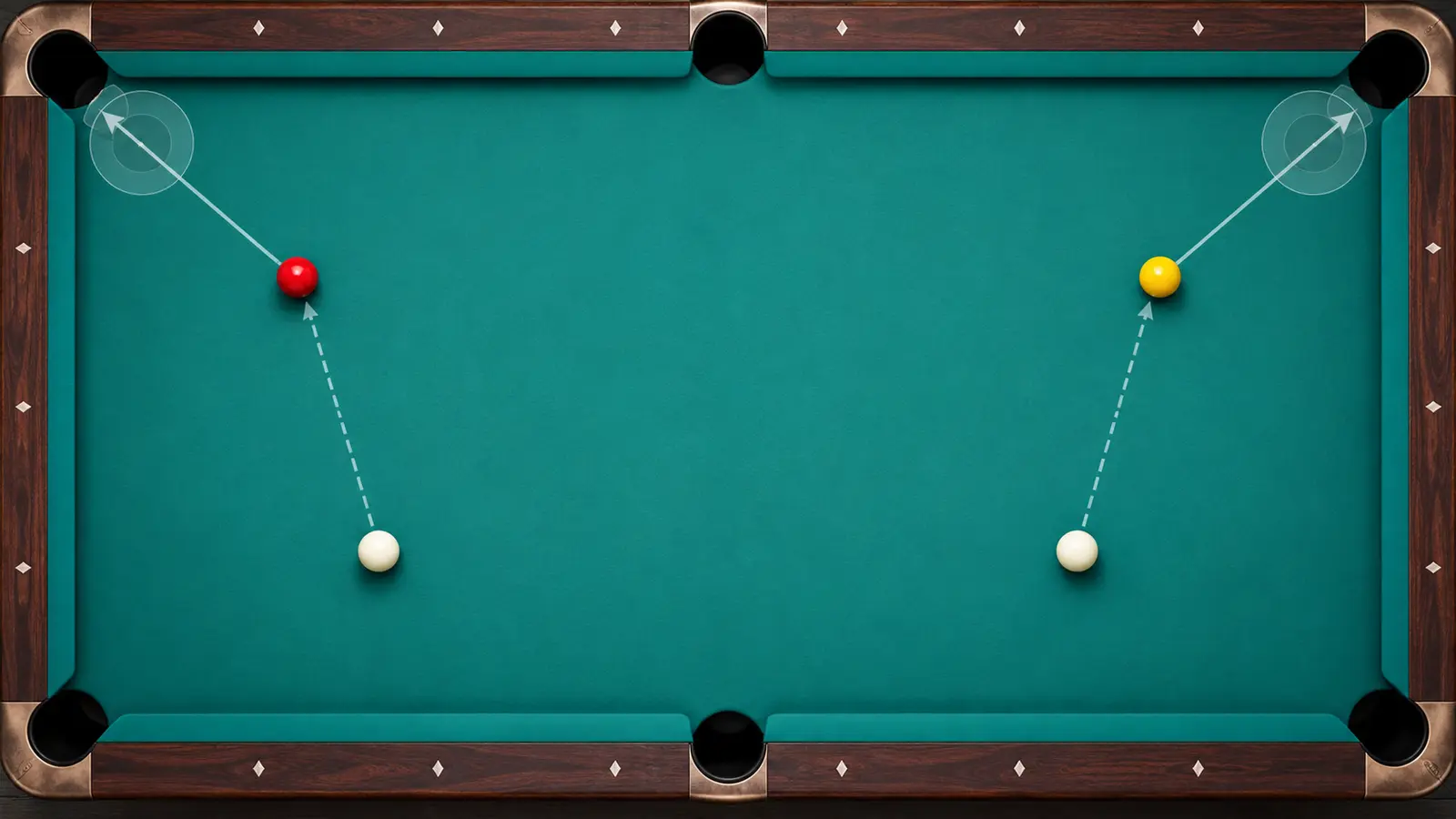
Build a mirrored pair
Mark one cue-ball position and one object-ball position for a comfortable cut into a corner pocket. Reproduce the same distances and angle on the opposite half of the table using the center line as the mirror.
Keep both layouts clear of other balls. The pair should be easy enough to reveal process differences; if either shot is already low percentage, simplify the angle before scoring.
Alternate instead of blocking repetitions
Shoot the left layout once, reset, then shoot the right layout once. Alternating forces a fresh walk-in and sight picture on every attempt instead of letting five identical repetitions blend together.
Use the same cue-ball contact and intended speed for the first set. This keeps the comparison focused on setup and delivery rather than spin changes.
Score the pocket and the leave
Place an identical landing zone for the cue ball on each side. Award one point for the called pocket and one for the cue ball finishing in its zone; a leave point counts only when the object ball is made.
Record left and right totals separately over ten attempts per side. A difference of one shot may be noise. A repeated gap across sessions is a reason to inspect the routine.
Change one demand at a time
After both sides score at least sixteen of twenty available points in two separate sessions, move the cue ball one diamond or reduce the landing zone. Keep the same pocketing and zone-point rule. Do not simultaneously change angle, speed and spin because the score would no longer identify which demand changed.
Later rounds can alternate high and low speed or follow and draw, but every variation should remain mirrored and use a written target.
Use a deliberate reset
Step away from the table after each shot. Name the next side, see the shot line while standing and enter the stance without steering the cue to rescue poor alignment.
If space around one side limits the stance, document that constraint. The goal is an adaptable process within safe access, not forcing identical foot placement where the room will not allow it.
Run the two-sided ladder
- Mark one moderate cut and its mirror image.
- Add equal cue-ball landing zones.
- Alternate sides for twenty total attempts.
- Score pocket and position separately.
- Repeat the weaker side only after the scored set.
- Advance one variable after both sides pass.