
Practice drills · 3 min read
How to Practice Tandem and Doubles Pool Skills
Two players can turn an artistic tandem idea into practical doubles training without attempting a choreographed stunt. The useful skills are shared planning, clear communication, predictable cue ball routes and respect for the active shooter. Practice them with one shooter at a time and a simple alternating shot format.
Confirm the format before you practice
Doubles rules are not identical across every event. Current WPA playing regulations describe doubles as players alternating shots within a rack. APA formats can add their own coaching and conversation limits. Read the rules for the event you will enter rather than carrying a practice habit into a format where it is not allowed.
For a private drill, choose a clear rule: partners alternate after every legal shot, one player breaks first and the other receives the next position. Keep the same order through the set so each player learns to leave a playable table for someone else.
Separate planning from execution
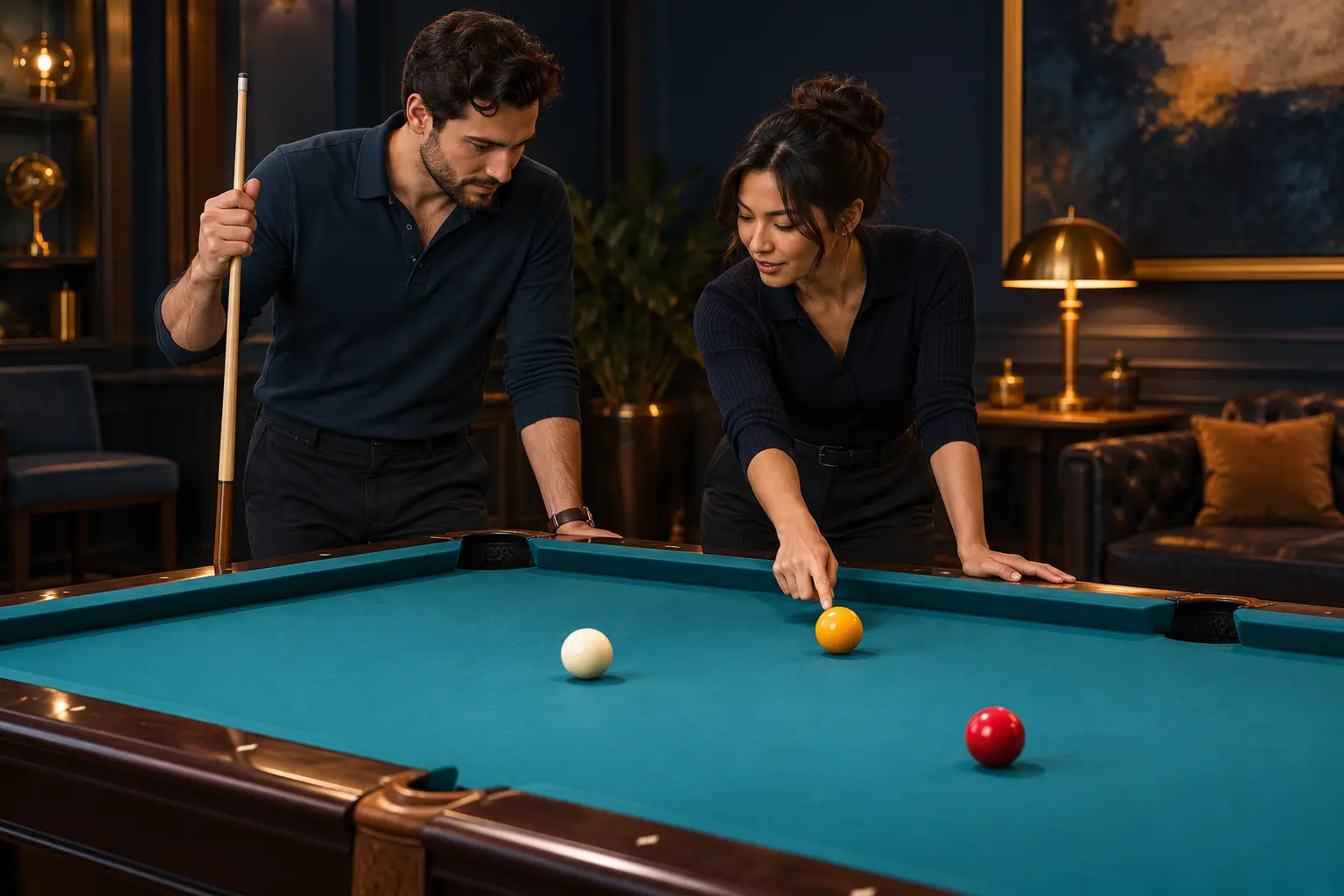
Discuss the pattern while both players are standing away from the shot. Agree on the object ball, intended pocket and a broad cue ball zone. Once the shooter begins the preshot routine, the partner becomes quiet and steps out of the visual field.
Do not physically guide the cue or continue giving instructions during delivery. Even in practice, that blurs responsibility for the shot. The shooter should make the final speed and spin decision and own the result.
Use zones instead of perfect leaves
A useful partner does not demand one exact cue ball spot. Mark a large position zone that preserves angle and avoids traffic. The receiving player then states which part of that zone gives the clearest route to the next ball.
After three successful patterns, shrink the zone or add one blocker. If the drill fails repeatedly, enlarge the zone and identify whether the problem is planning, speed or shot execution.
Run three partner stations
- Alternate stop shots, with each player changing the distance for the other.
- Play a three ball pattern where every leave must offer two pocket choices.
- Practice a safety exchange and require the partner to describe the escape before shooting.
- Repeat the same station with the shooting order reversed.
- Award one point for the pot and one for leaving the agreed zone.
- End a set if conversation, movement or equipment placement distracts the shooter.
Review decisions without assigning blame
After the set, choose one pattern that worked and one that failed. Ask whether the target zone was realistic, whether the cue ball speed matched the plan and whether the next player had a clear option. Avoid reducing every failure to the final miss.
Artistic pool recognizes team and modified formats, but its spectacular presentation is not necessary for this practice. Coordination becomes useful when both players can explain the route, execute safely and adapt without conflict.
Sources and further reading
References support the specific factual information above. The practical checklists are Ariakon editorial guidance.