
Competition · 3 min read
Stay Ready While Seated During a Pool Match
The chair is not a second table visit. Its useful jobs are to clear the shooter’s line, notice one material table change, release unnecessary tension and recognize when the turn returns. WATCH makes those jobs observable without staring, coaching from the chair or rehearsing an entire imaginary run.
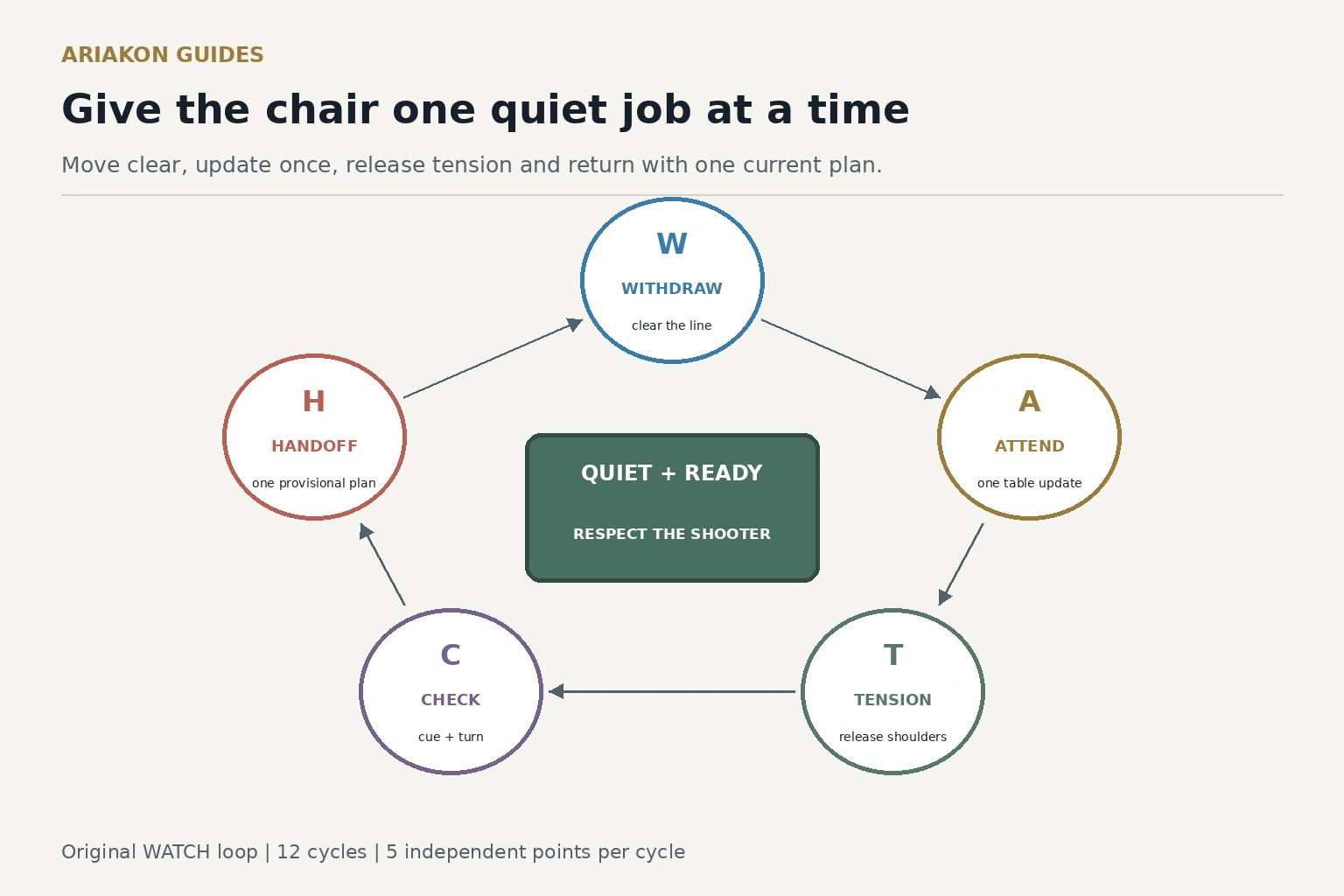
Use WATCH after every inning
Room, league and event directions control where players sit or stand. Follow officials and keep movement, equipment and conversation clear of the shooter.
AASP’s receiving-routine guidance supports reviewing the last point, letting it go, redirecting attention and using a present-focused cue. Adapt that structure conservatively; it does not establish a universal pool-chair script.
| Step | Quiet action |
|---|---|
| W — Withdraw | Move clear of the shooting line and place the cue safely |
| A — Attend once | Notice the lowest legal ball, open problem or changed cluster |
| T — Tension reset | Relax grip and shoulders; take one comfortable breath |
| C — Check the turn | Follow the score and table without distracting the shooter |
| H — Handoff | Stand only when appropriate and carry one current plan to the table |
Give attention a job between shots for the broader attention framework.
Build calm competitive composure for conduct and between-turn recovery.
Separate the table update from prediction
On sitting, identify only what changed: the legal first contact, a newly blocked pocket, a broken cluster or ball in hand. Once the snapshot is current, stop calculating branches that depend on several unplayed shots.
If the opponent creates a new layout, update again. Watching for evidence is different from judging stroke mechanics or hoping for an error. Keep your eyes and body language neutral and never position yourself in the shooter’s sight line.
Rehearse twelve seat-to-table cycles
With a partner during practice, alternate one inning of no more than three shots. The seated player performs WATCH without speaking. If practicing alone, use a recorded rack or a timer plus twelve photographed layouts; never simulate a chair routine by moving during another player’s real match.
Each cycle begins when the inning ends and finishes before the first warm-up stroke of the return shot. The returning player must still complete the normal standing decision process; the chair plan is provisional.
Score readiness and respect together
A cycle earns zero for Still if the partner reports avoidable movement in the line of sight, even if the table update was correct. Fair play is part of readiness.
The component scores are original review rules, not validated concentration measurements. Ask the partner only after the set, not during an inning.
| Point | Observable evidence |
|---|---|
| Clear | Moved out of line and cue stored safely |
| Update | Named one material table change afterward |
| Reset | Hands and shoulders visibly relaxed |
| Still | No distracting movement or commentary |
| Return | Approached with one current plan and rechecked it standing |
| Maximum 60 | Twelve cycles |
Worked review and match transfer
A hypothetical player earns twelve Clear, eleven Update, twelve Reset, ten Still and seven Return points. The notes show that three return plans were based on layouts that changed late in the opponent’s inning. The next session practices delaying the Handoff plan until the turn actually ends.
In match transfer, review three cycles after play: one good return, one lost-attention moment and one conduct check. Keep the cue word if it helped; remove any step that adds visible delay or distraction. Readiness means arriving at the table informed and composed, not predicting every future ball from the chair.
Sources and further reading
References support the specific factual information above. The practical checklists are Ariakon editorial guidance.