
Mental game · 3 min read
Stay Focused in Pool by Giving Attention a Job
Sustained focus is not a single feeling you either have or lose. In pool, attention can be assigned to a small job at each stage of the shot. That makes a lapse easier to notice and gives you a practical reset instead of a command to simply concentrate harder.
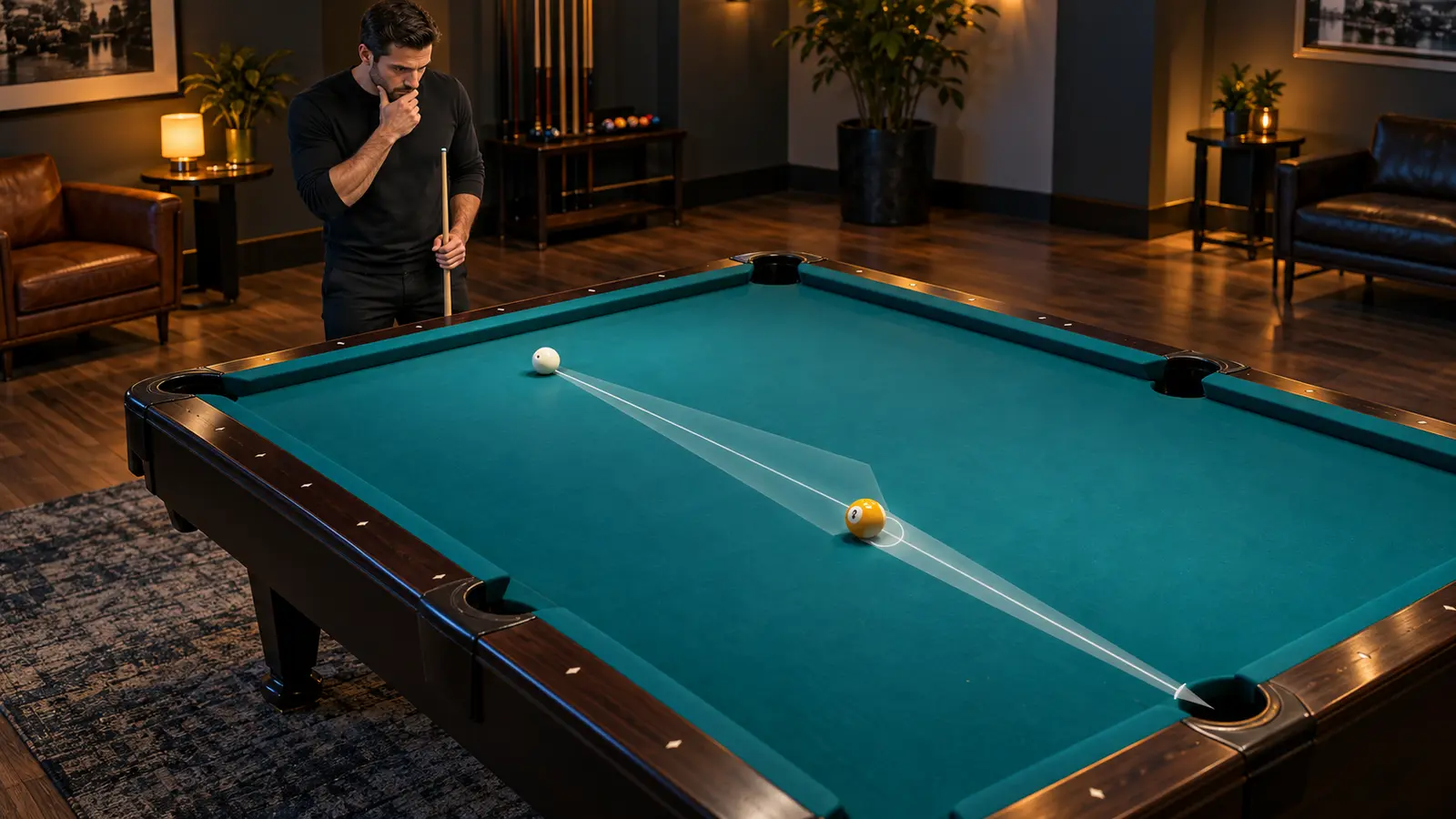
Separate the thinking phase from the shooting phase
While standing, read the table, choose the shot, identify the cue-ball route and decide the speed and spin. This is the time for comparison and correction. Once the choice is complete, use one short intention such as finish on the leave line or send the object ball through the pocket center.
A large change after you enter the stance is evidence that the plan is not settled. Stand up and begin again rather than combining planning, steering and striking into one hurried motion.
Aim attention at the effect you want
Motor-learning research generally favors an external focus on the intended movement effect over an internal focus on body parts. For a pool shot, useful external cues include the object-ball entry line, the cue-ball finish zone or the sound and pace of a clean center-ball strike.
Choose only one cue for the final delivery. A list such as keep the elbow still, loosen the hand, pause, stay down and follow through overloads the moment when the stroke should be simple. Save mechanical diagnosis for practice.
The research covers many motor tasks rather than proving that a particular pool cue will work for every player. Treat the selected external cue as a short personal comparison and keep it only when it helps the registered task.
Use a quiet final checkpoint
A purposeful pre-shot routine should lead from the standing picture to stable alignment and a final visual confirmation. Let the warm-up strokes collect information, then settle the eyes and mind before the delivery.
If the shot picture does not look right, the mind is still noisy or a distraction breaks the sequence, stop. Resetting is not weakness or delay; it protects the shot from an unresolved plan.
Give the chair a different job
Between visits, watch the table and your opponent for information that may matter later. When there is nothing actionable to observe, release the previous result and lower unnecessary tension. Replaying a miss does not repair it during the rack.
Use a neutral reset: one slow breath, notice your feet on the floor and name the next controllable task. This keeps recovery separate from shot execution.
Measure the process, not a feeling
After a rack, score three observable behaviors: plan completed while standing, one external cue used, and reset taken when doubt appeared. A made ball with a rushed routine is not automatically a good repetition; a missed ball after a sound process can still provide useful information.
Review patterns after the session. If attention repeatedly breaks at the same stage, practice that transition rather than labeling the whole match a focus problem.
Run a five-shot attention audit
- Name the shot, cue-ball route and speed while standing.
- Choose one external effect for the final delivery.
- Enter the stance only after the decision is complete.
- Stand up if the picture or attention changes materially.
- Mark the routine as complete or incomplete before judging the result.
- After five shots, keep the strongest cue and remove extra instructions.
Sources and further reading
References support the specific factual information above. The practical checklists are Ariakon editorial guidance.