
Competition guide · 3 min read
Recognize Pool Performance Anxiety and Build a Practical Match Reset
Match pressure may show up as faster tempo, altered breathing, a tighter grip, narrowed attention or repeated checking. Those observations can trigger a practical reset; they are not a diagnosis. The goal is to return to a normal decision and shot process, not to guarantee calm or eliminate every sensation.
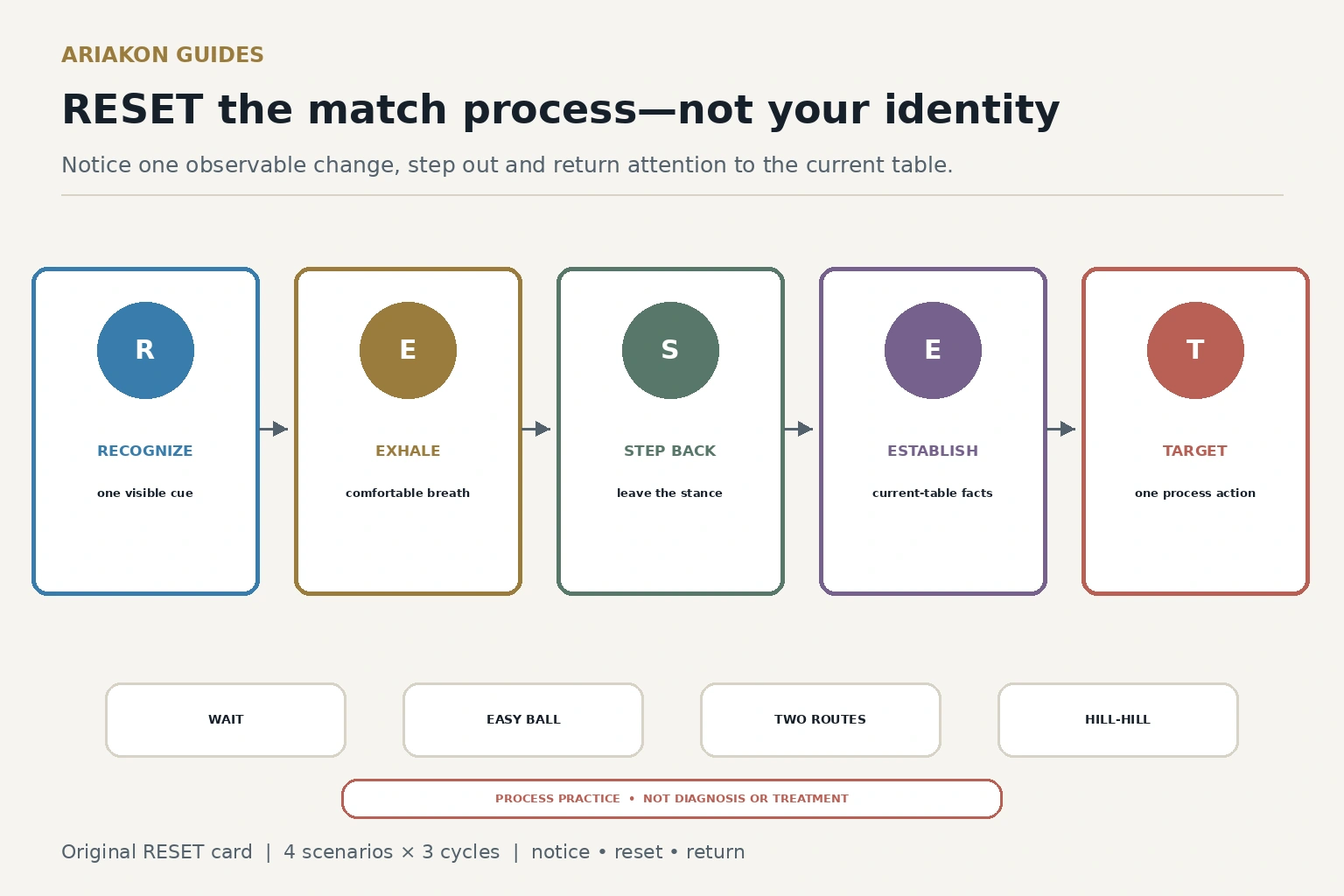
Recognize one observable change
Performance anxiety is commonly described as a stress response around performing under observation or pressure. Physical and cognitive signs can overlap with many other causes. Do not use this card to diagnose yourself or another player.
Stop play and seek appropriate help for severe or unfamiliar symptoms, a medical concern, or distress that persists or interferes beyond the match. A coach can help with sport routines; a qualified health professional is the right source for mental or physical health assessment.
| Area | Observable cue | Useful record |
|---|---|---|
| Tempo | Walking or shooting sooner than your baseline | Fast / normal / slow |
| Grip and body | Grip pressure rises or shoulders remain elevated | What changed before the shot |
| Breathing | Breath feels held or irregular | Noticed before or after stance |
| Attention | Score, audience or outcome replaces the current layout | Current-table fact you missed |
| Routine | Repeated feathers, standing up or skipping checks | First skipped step |
Build broader competitive composure for preparation and between-turn habits.
Use a consistent pre-shot routine as the stable process RESET returns to.
Use the RESET response script
Scenario: hill-hill, the easiest ball is available but you notice a fast walk and outcome thoughts. Say internally, ‘Fast tempo. Step back. Legal ball is the 4; broad stop zone; complete pause.’ Then use the ordinary routine. RESET does not decide the shot for you and should not become a long ritual that delays play.
| Step | Action |
|---|---|
| R — Recognize | Name one observable change: ‘My tempo is fast’ |
| E — Exhale | Take one comfortable unforced breath; do not prescribe a count |
| S — Step back | Leave the stance and give the table a fresh look |
| E — Establish | State the current score/turn, legal ball, route and main risk |
| T — Target | Choose one process action, then run the normal shot routine |
Rehearse and log twelve reset cycles
Use four staged scenarios: first shot after a long wait, an easy ball after a miss, a decision with two viable routes and a simulated hill-hill finish. Run three cycles each. Record the cue, skipped step, shot decision and ball outcome in separate columns.
Worked example: a player scores 11/12 notice, 9/12 reset and 7/12 return. Eight shots are made, but the useful pattern is that the normal routine disappears after ‘Establish.’ The next practice is six cycles that speak the current-table facts and then use one familiar routine. Success is better process return, not a promise that anxiety or misses vanish.
| Point | Observable condition |
|---|---|
| 1 — Notice | One real observable cue named without self-judgment |
| 1 — Reset | All five RESET steps completed without rushing |
| 1 — Return | Normal decision and shot routine completed |
| Maximum | 36 process points; ball outcome is logged separately |
Sources and further reading
References support the specific factual information above. The practical checklists are Ariakon editorial guidance.