
Buying and support · 3 min read
How to Prepare a Pool Equipment Return
A return is easier to organize when you preserve the equipment and collect the right information before shipping it. This guide walks through that preparation, from checking the item to saving the carrier receipt. Check the seller's written policy and your order details for eligibility, deadlines, charges and available remedies.
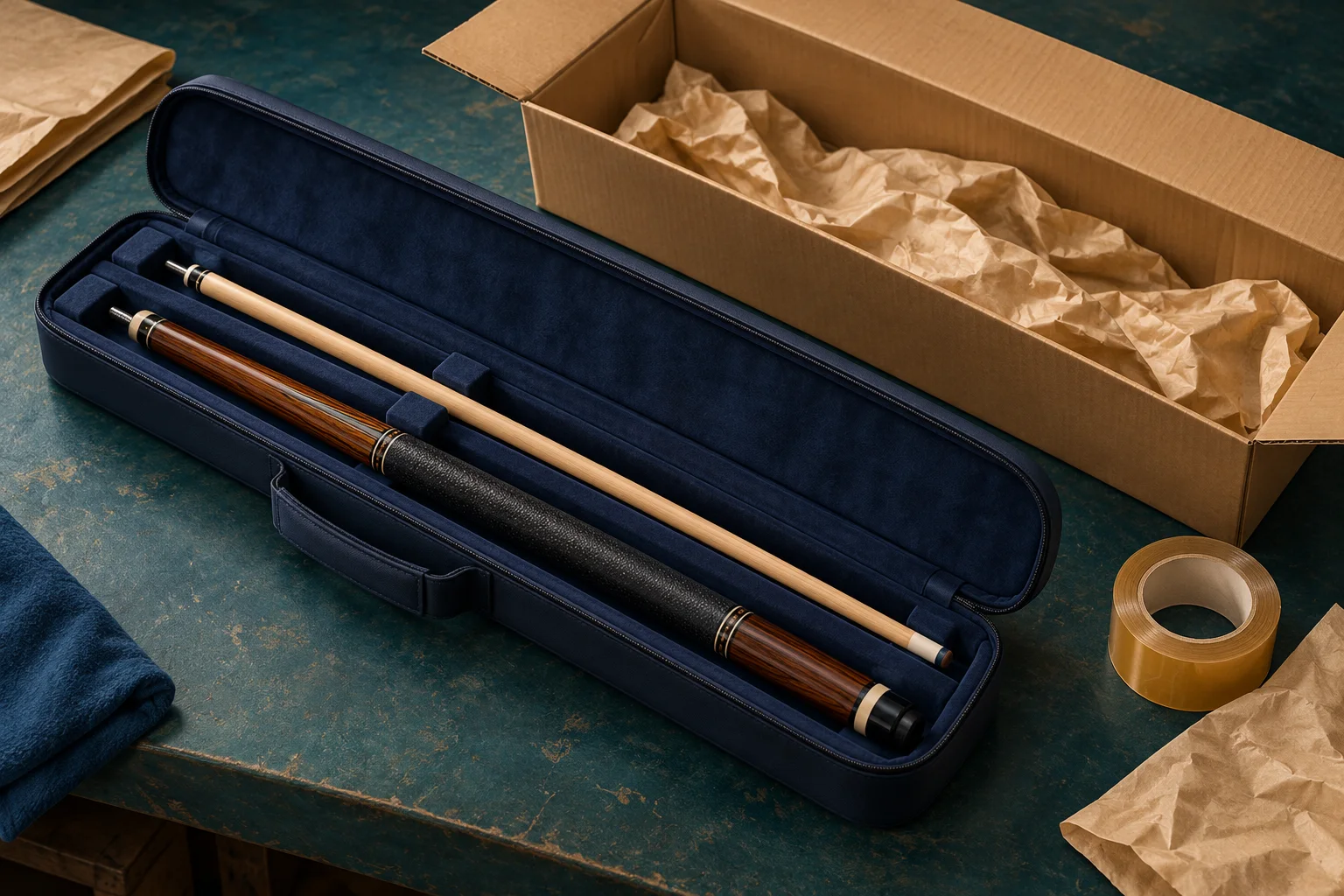
Pause before changing the equipment
If you are unsure whether to keep a cue, shaft or accessory, leave it in the condition in which it arrived while you check the return instructions. Installing a tip, sanding a shaft, removing labels or modifying a joint can make the received condition harder to establish. Do not perform an experiment simply to prove that an item is wrong for you.
Separate a change of mind from a mismatch or apparent defect. A cue that feels unfamiliar is a different issue from receiving the wrong joint option. Write down what you ordered, what arrived and what you would like to happen. Those three facts make a useful first message.
Read the actual conditions for your order
Find the policy linked by the seller and retain a copy of your receipt. Check what starts the return period, whether permission is required, which condition is acceptable and who pays each shipping charge. The FTC recommends reviewing return conditions and keeping purchase records when shopping online.
If you purchased through a marketplace or another dealer, begin with that seller's order channel. A manufacturer warranty and a retailer return process can be different routes. Ask which applies rather than sending an item to an address found on an unrelated website.
Assemble a useful request
- Order number and purchase date.
- Item name, model and selected options.
- A concise reason for the request.
- Clear photographs of the received item and packaging when relevant.
- The remedy you are requesting, such as an exchange for the correct option.
- A request for the authorized destination and packing instructions.
Wait for a clear shipping instruction
Confirm the return destination, any authorization reference and which pieces should be included. Do not assume a showroom, club or billing address is a return receiving location. Ask whether the original accessories and packaging need to accompany the item.
Keep the reply with your order records. If a label is supplied, check that it belongs to this return. Before buying your own label, clarify any uncertainty about costs or the service required. A tracking number is useful evidence of transport, but it is not itself confirmation of return eligibility.
Pack the cue so the parts cannot collide
Photograph the contents before closing the carton. Separate the shaft and butt of a jointed cue if the seller's instructions call for that arrangement. Cushion each component, protect exposed ends and prevent loose accessories from striking the finish. A soft cue sleeve alone should not be treated as a rigid shipping container.
UPS packaging guidance recommends a rigid box, appropriate cushioning, secure seams and removal of old shipping labels. Apply the chosen carrier's current requirements to your parcel. If the original carton is crushed or weakened, ask for packing guidance rather than assuming it remains adequate.
Keep the record until the process is complete
Save the request, authorization, packing photographs, dispatch receipt and tracking number together. Record the date the parcel is accepted by the carrier. If tracking stops or delivery is disputed, this organized record makes the next conversation easier.
After delivery, watch for the seller's acknowledgment and stated next step. If you need an update, quote the existing request and delivery information. Do not infer that a refund has been issued from the carrier's delivery scan alone.
Sources and further reading
References support the specific factual information above. The practical checklists are Ariakon editorial guidance.