
Equipment buying · 3 min read
Spot Pool Equipment Shopping Scams Before You Pay
A polished cue photo and a dramatic discount do not prove that the seller has the item or will honor the order. Slow the purchase down long enough to verify the business, the exact product and a recoverable payment path—especially for limited, custom or used equipment.
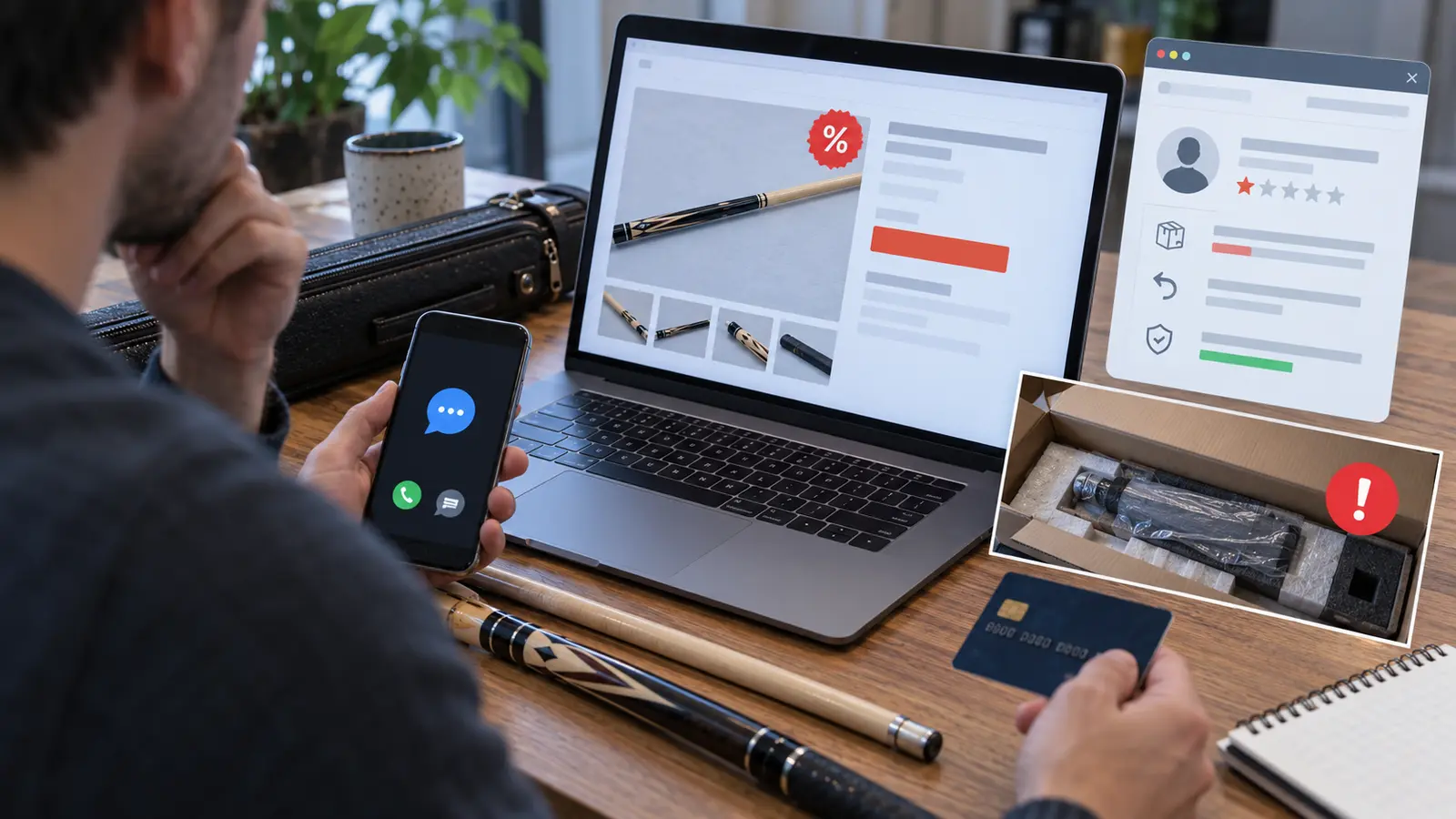
Verify the seller outside the advertisement
Type the business address yourself or follow a verified manufacturer dealer listing. Check how long the seller has been present, whether contact details are consistent and whether the stated location can be independently confirmed.
Search the business name and exact domain with terms such as complaint or scam. Reviews can be manipulated, so compare several sources and look for specific order details rather than a wall of identical praise.
Confirm the exact equipment
Match model, joint, shaft diameter, length, weight range, tip, condition and included accessories. Ask for current photos of a used or one-off item with a neutral identifier agreed during the conversation.
Reverse-image search suspicious photos when possible. A listing that borrows a manufacturer image may be legitimate, but it is not evidence that a private seller possesses that exact cue.
Read delivery, return and warranty terms
Identify when the item should ship, who carries damage risk, whether a signature is required and how a return is authorized. Save the policy version visible when you order.
Manufacturer warranty language does not automatically cover an unauthorized dealer, altered item or secondhand sale. Confirm coverage with the manufacturer or authorized seller when it matters.
Choose a recoverable payment route
Use a payment method that offers appropriate dispute rights and keep communication on the marketplace or seller channel. Be cautious when a seller moves the conversation elsewhere to avoid platform protections.
Treat demands for gift cards, wire transfers, cryptocurrency or payment to an unrelated person as stop signs for an ordinary retail purchase. Pressure to pay immediately is not proof of scarcity.
Protect accounts and messages
Do not sign in through a link from an unexpected delivery, coupon or order message. Open the known seller or carrier site separately and check the order there.
Never send a password, one-time code or full payment credential by email or chat. If information may have been exposed, contact the payment provider, change reused passwords and use the official fraud-reporting path.
Stop when the evidence does not join up
- The domain, business identity and contact details agree.
- The seller can identify the exact item and condition.
- Price and scarcity claims can survive a pause for verification.
- Shipping, return and warranty responsibilities are written.
- The payment method provides a documented dispute route.
- No credential, gift-card, wire or off-platform payment pressure appears.
Sources and further reading
References support the specific factual information above. The practical checklists are Ariakon editorial guidance.