
Mental game · 3 min read
Reset After a Pool Superstition Without Reinforcing It
A superstition can become disruptive when a player treats a missed ritual, unlucky object or perceived omen as evidence that the next shot will fail. The reset should neither perform the ritual nor ridicule a cultural belief. It should make room for the thought, decline to use it as shot information and return attention to controllable pool decisions.
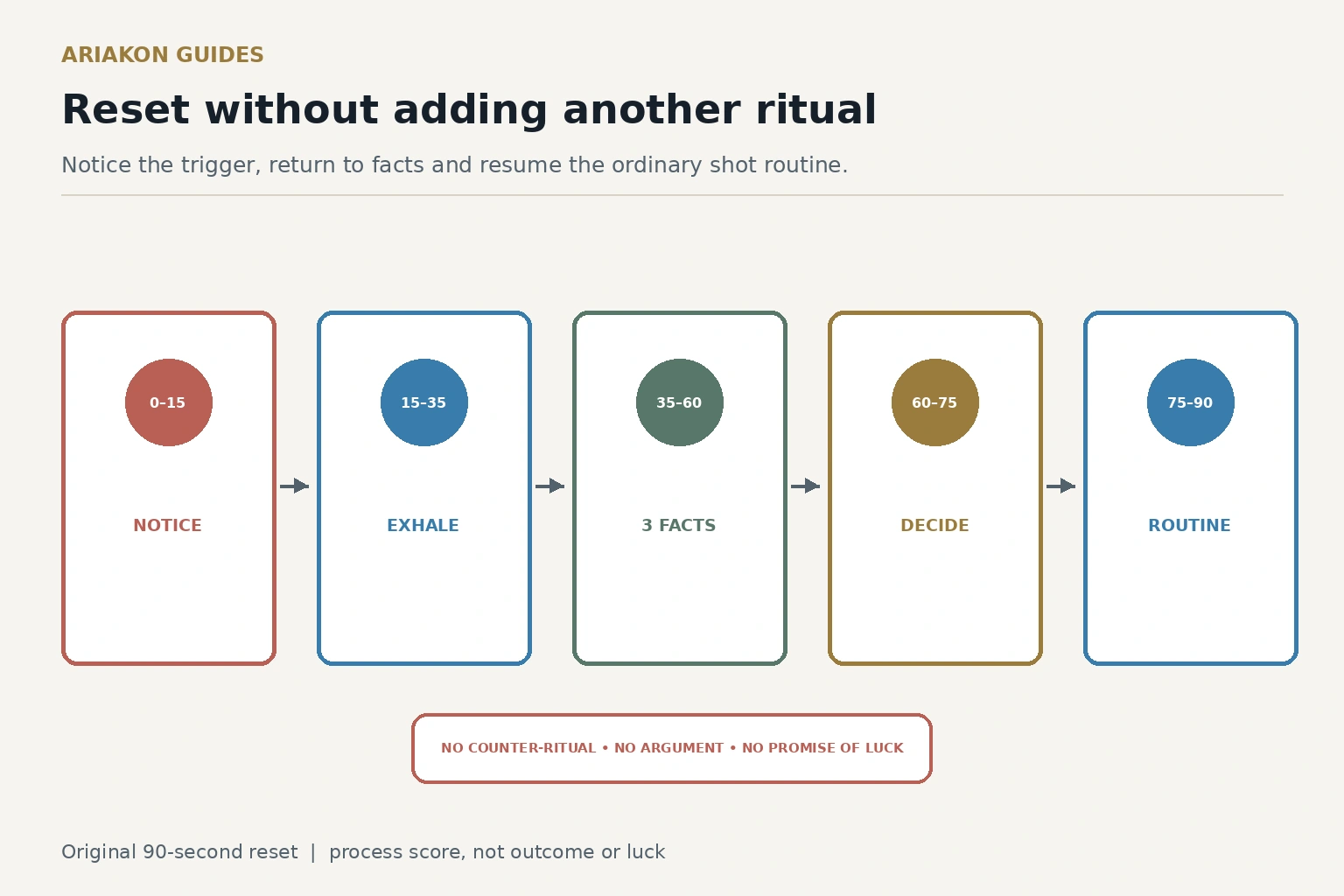
Use a ninety-second non-reinforcing reset
The sentence is not a magic counter-phrase. If the exact wording becomes mandatory, vary it while keeping the function: notice, facts, decision, routine. Follow event timing rules; take no extra timeout that has not been granted.
| Time | Action | Purpose |
|---|---|---|
| 0–15 seconds | Name the trigger privately: ‘I noticed the unlucky thought’ | Acknowledge without treating it as evidence |
| 15–35 seconds | One slow exhale and relaxed grip-hand check | Reduce hurried behavior |
| 35–60 seconds | State three facts: layout, score and turn status | Return to observable match information |
| 60–75 seconds | Choose one shot objective and one miss boundary | Make the decision |
| 75–90 seconds | Begin the ordinary pre-shot routine | Resume performance without a replacement ritual |
Separate superstition from routine for the broader distinction.
Use a repeatable pre-shot routine after the reset is complete.
Fill in the trigger worksheet
| Field | Example entry |
|---|---|
| Trigger | Missed my usual lucky chalk tap |
| Prediction the mind supplied | The rack will turn against me |
| Observable facts | Open 4-ball, cue ball near center, score tied |
| Controllable next action | Choose pocket speed and center contact |
| Did I perform the ritual? | No |
| Did I complete the normal routine? | Yes |
Practice six racks without manufacturing distress
Before each practice rack, draw one neutral trigger card: change chalk position, use a different towel location or start without a favorite song. Do not use culturally sacred objects, personal fears or anything that creates genuine distress. If discomfort rises, stop the exercise and return to ordinary practice.
Score one point each for noticing without arguing, stating observable facts, choosing a shot, completing the ordinary routine and accepting the result without adding a ritual. Maximum five per rack and thirty across six racks.
Know when the reset is not enough
| Pattern | Next action |
|---|---|
| Thought passes after the normal reset | Continue play without reviewing it |
| Player adds a new mandatory counter-ritual | Remove the phrase or action; return to facts |
| Ritual consumes practice time repeatedly | Pause the drill and seek qualified support |
| Belief creates severe anxiety or impairment | Consult a licensed mental-health professional |
| Teammate holds a cultural belief | Do not mock or diagnose; keep coaching on controllable play |
Worked reset and evidence limit
A hypothetical player normally taps the rail twice before a break and forgets. The thought ‘now the rack is bad’ appears. The player names it, exhales, states the rack facts, chooses a controlled break objective and uses the ordinary routine. The break result is recorded separately; success is completing the non-reinforcing process, not making a ball.
This worksheet makes no claim that a ritual changes chance or that a reset guarantees better performance. Its useful result is narrower: the player returns to facts, selects a legal shot and completes an ordinary routine without adding a mandatory counter-ritual. Review that process separately from the next ball or rack result.